The fear that self-acceptance necessarily annihilates ethical judgment is groundless, for we are perfectly able to distinguish between up and down at… - Alan Watts
""
The fear that self-acceptance necessarily annihilates ethical judgment is groundless, for we are perfectly able to distinguish between up and down at any point on the earth's surface, realizing at the same time that there is no up and down in the larger framework of the cosmos. Self-acceptance is therefore the spiritual and psychological equivalent of space, a freedom of which does not annihilate distinctions but makes them possible.
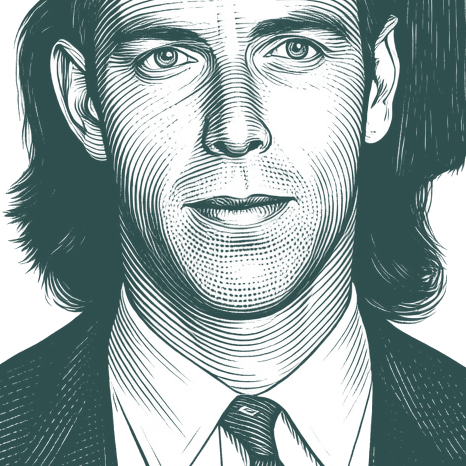
Alan Wilson Watts (6 January 1915 – 16 November 1973) was an English philosopher, writer, speaker, and expert in comparative religion.
Biography information from
Wikiquote·
Portrait adapted from
Wikimedia Commons, The University of Vermont Alumni Magazine vol. 39 no. 01, p. 22. (Public domain / CC0)
Also Known As
Alternative Names:
Alan Wilson Watts
•
Alan W. Watts
Portrait from Wikimedia Commons. Credit: The University of Vermont Alumni Magazine vol. 39 no. 01, p. 22.. Used under Public domain / CC0. Processed and styled by Quotewise.
Go Premium
Support Quotewise while enjoying an ad-free experience and premium features.
Clear sight has nothing to do with trying to see; it is just the realization that that the eyes will take in every detail all by themselves, for so long as they open they can hardly prevent the light from reaching them. In the same way, there is no difficulty in being fully aware of the eternal present as soon as it is seen that one cannot possibly be aware of anything else - that in concrete fact there is no past or future.
The idea that there are no wrong feelings is immensely threatening to people who are afraid to feel. This is one of the peculiar problems of Western culture: We are terrified of our feelings, because they take off on their own. We think that if we give them any scope, if we don’t immediately beat them down, they will lead us into all kinds of chaotic and destructive actions.
Enhance Your Quote Experience
Enjoy ad-free browsing, unlimited collections, and advanced search features with Premium.
Just as no thing or organism exists on its own, it does not act on its own. Furthermore, every organism is a process: thus the organism is not other than its actions. To put it clumsily: it is what it does. More precisely, the organism, including its behavior, is a process which is to be understood only in relation to the larger and longer process of its environment. For what we mean by "understanding" or "comprehension" is seeing how parts fit into a whole, and then realizing that they don't compose the whole, as one assembles a jigsaw puzzle, but that the whole is a pattern, a complex wiggliness, which has no separate parts. Parts are fictions of language, of the calculus of looking at the world through a net which seems to chop it up into bits. Parts exist only for purposes of figuring and describing, and as we figure the world out we become confused if we do not remember this all the time.