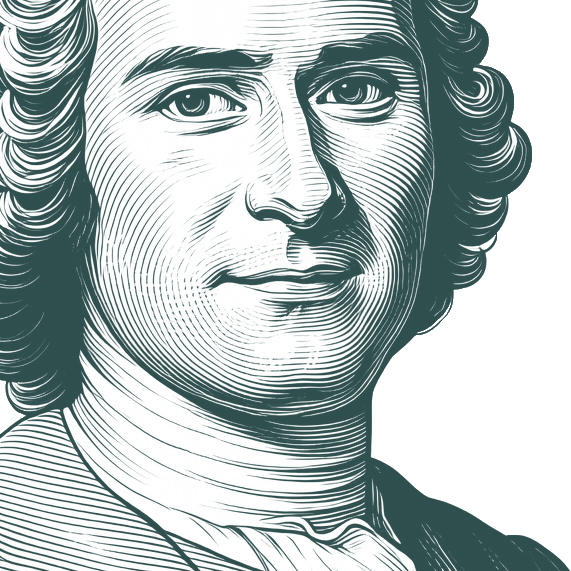
When once it is proved that men and women are and ought to be unlike in constitution and in temperament, it follows that their education must be diff… - Jean-Jacques Rousseau
""
When once it is proved that men and women are and ought to be unlike in constitution and in temperament, it follows that their education must be different. Nature teaches us that they should work together, but that each has its own share of the work; the end is the same, but the means are different, as are also the feelings which direct them. We have attempted to paint a natural man, let us try to paint a helpmeet for him.
You must follow nature’s guidance if you would walk aright. The native characters of sex should be respected as nature’s handiwork. You are always saying, “Women have such and such faults, from which we are free.” You are misled by your vanity; what would be faults in you are virtues in them; and things would go worse, if they were without these so-called faults. Take care that they do not degenerate into evil, but beware of destroying them.
English
Collect this quote
About
Jean-Jacques Rousseau
Jean-Jacques Rousseau (June 28, 1712 – July 2, 1778) was a major French-speaking Genevan philosopher of Enlightenment whose political ideas influenced the French Revolution, the development of socialist theory, and the growth of nationalism.
Biography information from
Wikiquote·
Portrait adapted from
Wikimedia Commons, Maurice Quentin de La Tour (Public domain / CC0)
Also Known As
Alternative Names:
Citizen of Geneva
•
Jean Jacques Rousseau
•
J. J. Rousseau
•
Rousseau
•
J.J. Rousseau
•
JJ Rousseau
As a general rule—never substitute the symbol for the thing signified, unless it is impossible to show the thing itself; for the child's attention is so taken up with the symbol that he will forget what it signifies.
Ruhun tümüyle dayanabileceği, geçmişi anımsamaksızın ve geleceğe el uzatmaksızın bütün benliğini toplayabileceği; zamanı hiçe sayabileceği; var olmaktan başka, yoksulluk hazzına da, zevkin ve üzüntünün, isteğin ve korkunun gereksinime duyulamayacağı bir durum varsa, bu durum sürdükçe herkes, yaşamın eğlencelerinde bulunan eksik, yoksul ve görece bir mutluluğa değil de ruhta doldurmak gereği duyulan hiçbir boşluk bırakmayan olgunlaşmış ve yetkin bir mutluluğa kavuştuğunu söyleyebilir. Böyle bir durumda neden zevk alınır? Sanırım dışımızdan, kendimizden başka, yaşamımızdan başka şeylerden değil; insan yaşadıkça, Tanrı gibi, kendine yeter. Herhangi bir bağı olmayan yaşama duygusu, değeril bir hoşnutluk ve erinçlik duygusudur; boyuna aklımızı çelen, yaşamın tadını kaçıran kösnül ve maddesel duygulardan sıyrılmasını bilenler için, güzel ve tatlıdır. Ama, ardı arkası gelmez tutkularla çalkalanan insanların çoğu bu ruh durumunu bilmez; a da o denli az bilir ki tadına varamazlar. Dahası, bu tatlı kendinden geçmeleri isteyerek, gereksinimleri durmaksızın değişen yaşamdan iğrenmeleri, bugünkü koşullarda doğru değildir. Ama toplumdan dışlanan ve yeryüzünde ne kendisine ne de başkalarına yarayacak bir şey yapabilen bir mutsuz, talihin ve benzerlerinin elinden alamayacağı bir tür mutluluk bulur.
PREMIUM FEATURE
Advanced Search Filters
Filter search results by source, date, and more with our premium search tools.
Si donc on écarte du pacte social ce qui n'est pas de son essence, on trouvera qu'il se réduit aux termes suivants: Chacun de nous met en commun sa personne et toute sa puissance sous la suprême direction de la volonté générale; et nous recevons en corps chaque membre comme partie indivisible du tout.