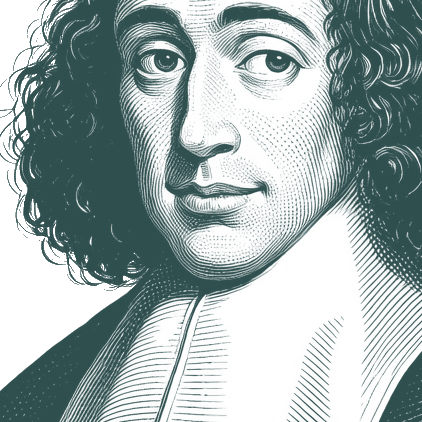
...For the present it would be a vain undertaking to try to make all these people understand this frank principle of communist ethics, a principle wh… - Benedictus de Spinoza
""
...For the present it would be a vain undertaking to try to make all these people understand this frank principle of communist ethics, a principle which declares that gratitude and admiration should come as a spontaneous gift from our fellow-beings. Many of them would not care to reach out for progress, were they sure of being told, in the words of Baruch Spinoza, that virtue is its own reward.
Benedictus de Spinoza (24 November 1632 – 21 February 1677) was a social and metaphysical philosopher known for the elaborate development of his monist philosophy, which has become known as Spinozism. Controversy regarding his ideas led to his excommunication from the Jewish community of his native Amsterdam. He was named Baruch ("blessed" in Hebrew) Spinoza by his synagogue elders and known as Bento de Spinoza or Bento d'Espiñoza, but afterwards used the name Benedictus ("blessed" in Latin) de Spinoza.
Native Name:
בָּרוּךְ שְׂפִּינוֹזָה
•
Benedito de Espinosa
Alternative Names:
Benedict de Spinoza
•
Baruch de Espinosa
•
Barukh Shpinozah
•
Benoît de Spinoza
•
Sbīnūzā
•
Ispīnūzā
•
Barukh Spinoza
•
Bento de Espinosa
•
Baruch d' Espinoza
•
Shpinozah
•
Baruch de Spinoza
•
Spinoza
•
Benoit de Spinoza
•
Benedictus De Spinoza
•
Benedictus Spinoza
•
Baruch Spinoza
•
Baruch Benedictus de Spinoza
I will never forget that, in the hurricane of my adolescence, I found refuge in the deep nest of the Ethics. [Original in French: Je n'oublierai jamais que, dans le cyclone de mon adolescence, j'ai trouvé refuge au nid profond de l'Éthique.]
إن سعادة الفرد ونعيمه الحقيقي لا يكونان إلا في تَمتُّعه بالخير، لا في فخره بأنه وحدَه الذي يتمتَّع به مع استبعاد الآخرين
Limited Time Offer
Premium members can get their quote collection automatically imported into their Quotewise collections.
It is to the highest credit of the philosophy of the time that it did not let itself be led astray by the restricted state of contemporary natural knowledge, and that — from Spinoza down to the great French materialists — it insisted on explaining the world from the world itself and left the justification in detail to the natural science of the future.