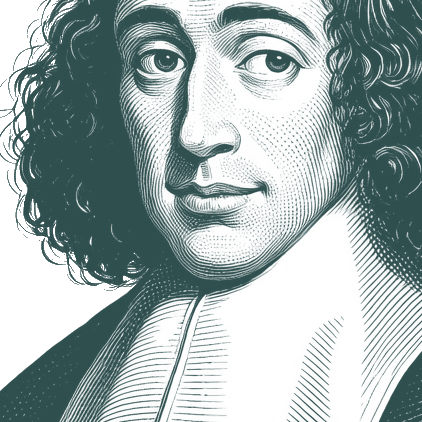
...As to feeling a difference in Jews, I feel it I think, only if they do; and then it doesn't signify a preference or the opposite, but only a diver… - Benedictus de Spinoza
""
...As to feeling a difference in Jews, I feel it I think, only if they do; and then it doesn't signify a preference or the opposite, but only a diversity. My best pupils were Jews, as was my only modern “master” in philosophy, Spinoza. But many are not happy, and that is a pity.
English
Collect this quote
About
Benedictus de Spinoza
Benedictus de Spinoza (24 November 1632 – 21 February 1677) was a social and metaphysical philosopher known for the elaborate development of his monist philosophy, which has become known as Spinozism. Controversy regarding his ideas led to his excommunication from the Jewish community of his native Amsterdam. He was named Baruch ("blessed" in Hebrew) Spinoza by his synagogue elders and known as Bento de Spinoza or Bento d'Espiñoza, but afterwards used the name Benedictus ("blessed" in Latin) de Spinoza.
Native Name:
בָּרוּךְ שְׂפִּינוֹזָה
•
Benedito de Espinosa
Alternative Names:
Benedict de Spinoza
•
Baruch de Espinosa
•
Barukh Shpinozah
•
Benoît de Spinoza
•
Sbīnūzā
•
Ispīnūzā
•
Barukh Spinoza
•
Bento de Espinosa
•
Baruch d' Espinoza
•
Shpinozah
•
Baruch de Spinoza
•
Spinoza
•
Benoit de Spinoza
•
Benedictus De Spinoza
•
Benedictus Spinoza
•
Baruch Spinoza
•
Baruch Benedictus de Spinoza
I also believe that Spinoza, like Nietzsche and Schopenhauer, on whose lives and philosophy I have based two earlier novels, wrote much that is highly relevant to my field of psychiatry and psychotherapy—for example, that ideas, thoughts, and feelings are caused by previous experiences, that passions may be studied dispassionately, that understanding leads to transcendence—and I wished to celebrate his contributions through a novel of ideas.
The wish to preserve oneself is the symptom of a condition of distress, of a limitation of the really fundamental instinct of life which aims at the expansion of power and, wishing for that, frequently risks and even sacrifices self-preservation. It should be considered symptomatic when some philosophers–for example, Spinoza who was consumptive–considered the instinct of self-preservation decisive and had to see it that way; for they were individuals in conditions of distress.
Enhance Your Quote Experience
Enjoy ad-free browsing, unlimited collections, and advanced search features with Premium.
«يُشير سِفر أخبار الأيام الأول (الإصحاح ٢١) إلى حدوث الوحي عن طريق الصُّوَر الحِسِّية وحدَها حيث يكشِف الله عن غضبه على داود فيُريه ملاكًا قابضًا سيفًا بيده،١٤ وقد حدث ذلك أيضًا لبلعام،١٥ صحيح أن ابن ميمون١٦ وآخرين يَرَون أنَّ هذه القصة ليست إلَّا مُجرَّد حلم (وكذلك كل القصص التي تروي ظهور ملك، مثل قِصَّة مانويه١٧ وقصة إبراهيم عندما رأى في منامه أنه يذبح ابنه١٨ … إلخ). وينكرون أن يكون أي إنسان قد استطاع رؤية ملك بعينَين مفتوحَتَين، ولكن هذا الرأي مُجرَّد ثرثرة، لقد كان هَمُّهم تأويل الكتاب ليستخلصوا منه تُرَّهات أرسطو وتخيُّلاتهم الخاصة، وهي في رأيي أكثر المُحاولات مَدعاةً للسخرية. وفي مُقابل ذلك، فإنَّ الله أوحى ليوسُف نصرَه المُؤزَّر مُستقبلًا، لا عن طريق صور حقيقية، بل بِصُورٍ من مُخيَّلة النبي نفسه»