what he sought was always something lying ahead, and even if it was a matter of the past it was a past that changed gradually as he advanced on his j… - Italo Calvino
""
what he sought was always something lying ahead, and even if it was a matter of the past it was a past that changed gradually as he advanced on his journey, because the traveller's past changes according to the route he has followed: not the immediate past, that is, to which each day that goes by adds a day, but the more remote past. Arriving at each new city, the traveller finds again a past of his that he did not know he had: the foreignness of what you no longer are or no longer possess lies in wait for you in foreign, unpossessed places.
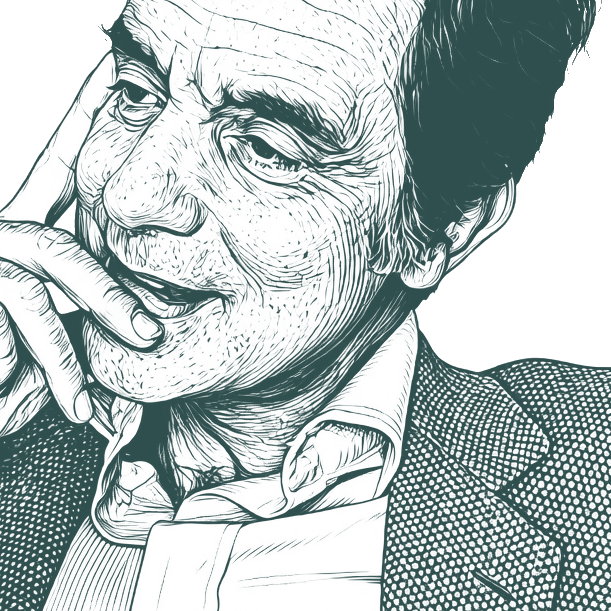
Italo Calvino (October 15, 1923 – September 19, 1985) was an Italian journalist and writer of short stories and novels. Lionized in Britain and America, he was, at the time of his death, the most-translated contemporary Italian writer.
Biography information from
Wikiquote·
Portrait adapted from
Wikimedia Commons, The original uploader was Varie11 at Italian Wikipedia. (Public domain / CC0)
Also Known As
Alternative Names:
Italo Giovanni Calvino
•
Italo Giovanni Calvino Mameli
Portrait from Wikimedia Commons. Credit: The original uploader was Varie11 at Italian Wikipedia.. Used under Public domain / CC0. Processed and styled by Quotewise.
Unlimited Quote Collections
Organize your favorite quotes without limits. Create themed collections for every occasion with Premium.
Related quotes. More quotes will automatically load as you scroll down, or you can use the load more buttons.
Shorter versions of this quote
Arriving at each new city, the traveler finds again a past of his that he did not know he had: the foreignness of what you no longer are or no longer possess lies in wait for you in foreign, unpossessed places.
A classic is a book that has never finished saying what it has to say.
...the people who move through the streets are all strangers. At each encounter, they imagine a thousand things about one another; meetings which could take place between them, conversations, surprises, caresses, bites. But no one greets anyone; eyes lock for a second, then dart away, seeking other eyes, never stopping...something runs among them, an exchange of glances like lines that connect one figure with another and draw arrows, stars, triangles, until all combinations are used up in a moment, and other characters come on to the scene...
…we can not love or think except in fragments of time each of which goes along its own trajectory and immediately disappears.