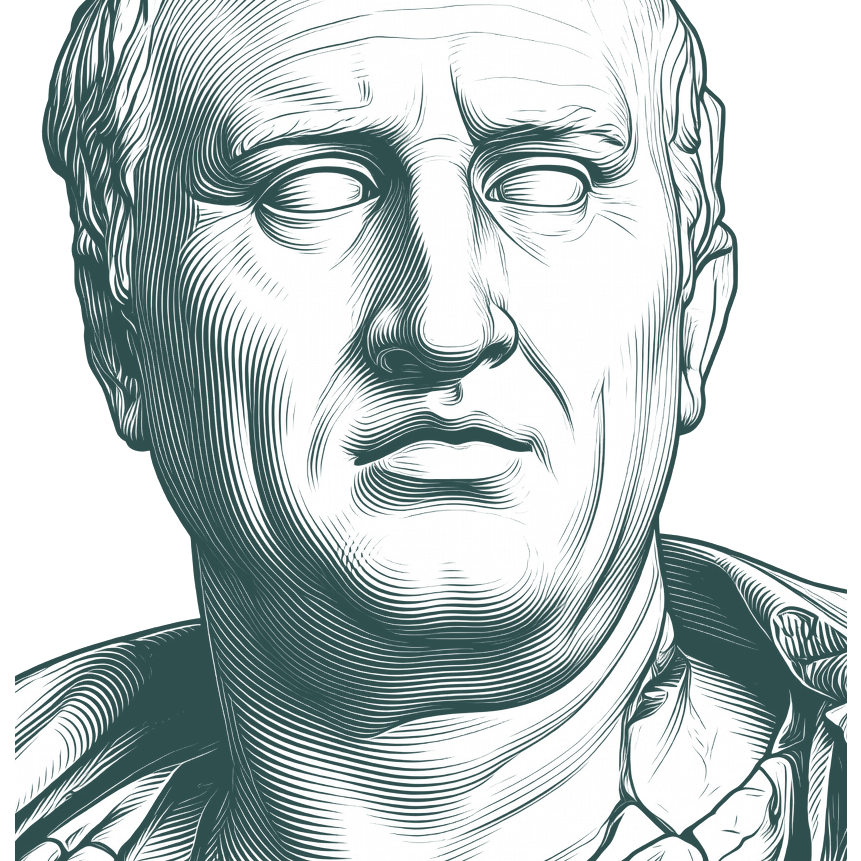
The aim of a ship's captain is a successful voyage; a doctor's, health; a general's, victory. So the aim of our ideal statesman is the citizens' happ… - Cicero
""
The aim of a ship's captain is a successful voyage; a doctor's, health; a general's, victory. So the aim of our ideal statesman is the citizens' happy life — that is, a life secure in wealth, rich in resources, abundant in renown, and honorable in its moral character. That is the task which I wish him to accomplish — the greatest and best that any man can have.
Marcus Tullius Cicero (3 January 106 BC – 7 December 43 BC), infrequently known by the anglicized name Tully in the Middle Ages and after, was a Roman philosopher, politician, lawyer, orator, political theorist, consul and constitutionalist. He came from a wealthy municipal family of the Roman equestrian order, and is widely considered one of Rome's greatest orators and prose stylists.
Ought one to remain in one’s country when under a tyrant? If one’s country is under a tyrant ought one to labour at all hazards for the abolition of the tyranny, even at the risk of the total destruction of the city? Or ought we to be on our guard against the man attempting the abolition, lest he should rise too high himself?
Ought one to assist one’s country when under a tyrant by seizing opportunities and by argument rather than by war?
Is it acting like a good citizen to quit one’s country when under a tyrant for any other land, and there to remain quiet, or ought one to face any and every danger for liberty’s sake?
Ought one to wage war upon and besiege one’s native town, if it is under a tyrant?
Even if one does not approve an abolition of a tyranny by war, ought one still to enroll oneself in the ranks of the loyalists?
Ought one in politics to share the dangers of one’s benefactors and friends, even though one does not think their general policy to be wise?
Should a man who has done conspicuous services to his country, and on that very account has been shamefully treated and exposed to envy, voluntarily place himself in danger for his country, or may he be permitted at length to take thought for himself and those nearest and dearest to him, giving up all political struggles against the stronger party?
Breve tempus ætatis satis est longum ad bene honesteque vivendum
Works in ChatGPT, Claude, or Any AI
Add semantic quote search to your AI assistant via MCP. One command setup.