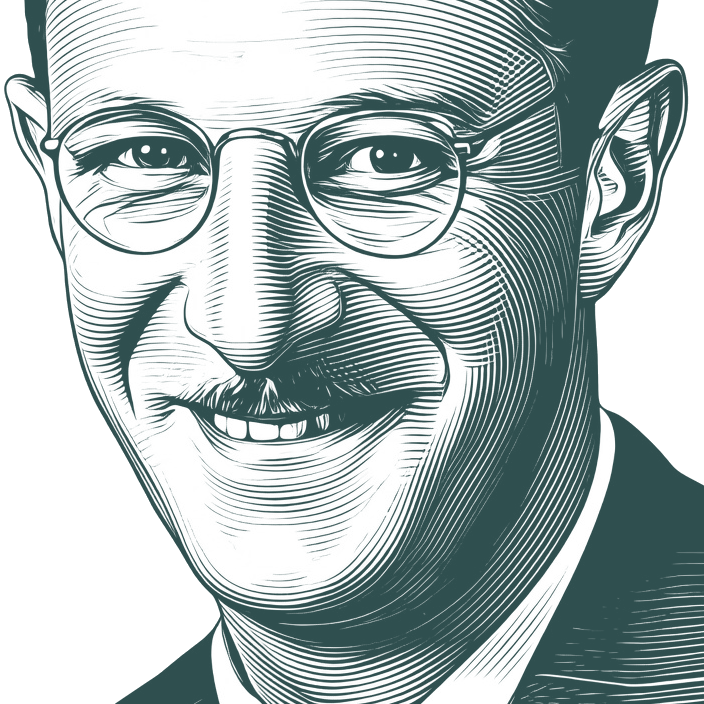
But many times the cage has an open door, and a man has only to walk out if he wishes. If he does not, it is usually his script which keeps him there… - Eric Berne
""
But many times the cage has an open door, and a man has only to walk out if he wishes. If he does not, it is usually his script which keeps him there. That is familiar and reassuring, and after looking out at the great world of freedom with all its joys and dangers, he turns back to the cage with its buttons and levers, knowing that if he keeps busy pushing them, and pushes the right one at the right time, he will be assured of food, drink, and an occasional thrill. But always, such a caged person hopes or fears that some force greater than himself, the Great Experimenter or the Great Computer, will change or end it all.
Eric Berne (born Eric Lennard Bernstein May 10, 1910 – July 15, 1970) was an American psychiatrist and writer, best known as the creator of Transactional analysis, and as the author of Games People Play: the Psychology of Human Relations (1964).
Pastimes form the basis for the selection of acquaintances, and may lead to friendship. A party of women who drop in at each other’s houses every morning for coffee to play “Delinquent Husband” are likely to give a cool reception to a new neighbor who wants to play “Sunny Side Up.
Games are clearly differentiated from procedures, rituals, and pastimes by two chief characteristics: (1) their ulterior quality and (2) the payoff. Procedures may be successful, rituals effective, and pastimes profitable, but all of them are by definition candid; they may involve contest, but not conflict, and the ending may be sensational, but it is not dramatic. Every game, on the other hand, is basically dishonest, and the outcome has a dramatic, as distinct from merely exciting, quality.
Unlimited Quote Collections
Organize your favorite quotes without limits. Create themed collections for every occasion with Premium.
Wasteful moves are eliminated, and more and more purpose is condensed into each move. “Beautiful friendships” are often based on the fact that the players complement each other with great economy and satisfaction, so that there is a maximum yield with a minimum effort from the games they play with each other.