Then we have computer science. It is true that software cannot exercise its powers of lightness except through the weight of hardware. But it is the … - Italo Calvino
""
Then we have computer science. It is true that software cannot exercise its powers of lightness except through the weight of hardware. But it is the software that gives the orders, acting on the outside world and on machines that exist only as functions of software and evolve so that they can work out ever more complex programs. The second industrial revolution, unlike the first, does not present us with such crushing images as rolling mills and molten steel, but with "bits" in a flow of information traveling along circuits in the form of electronic impulses. The iron machines still exist, but they obey the orders of weightless bits.
English
Collect this quote
About
Italo Calvino
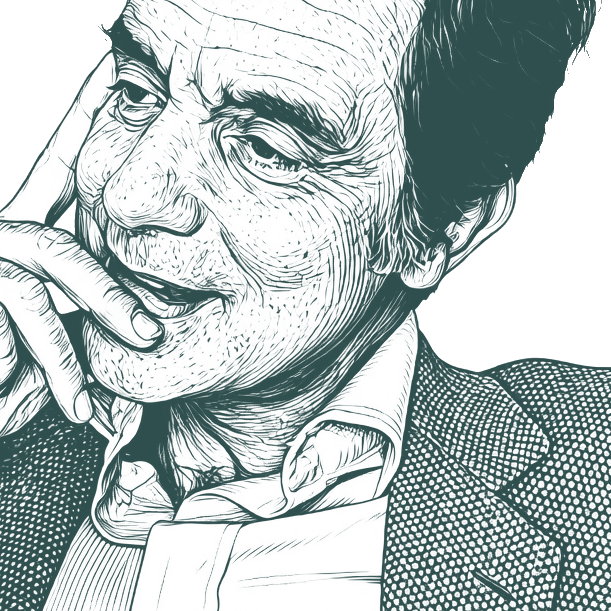
Italo Calvino (October 15, 1923 – September 19, 1985) was an Italian journalist and writer of short stories and novels. Lionized in Britain and America, he was, at the time of his death, the most-translated contemporary Italian writer.
Biography information from
Wikiquote·
Portrait adapted from
Wikimedia Commons, The original uploader was Varie11 at Italian Wikipedia. (Public domain / CC0)
Also Known As
Alternative Names:
Italo Giovanni Calvino
•
Italo Giovanni Calvino Mameli
Why do you speak to me of the stones? It is only the arch that matters to me." Polo answers: "Without stones there is no arch.
One should be light like a bird and not like a feather.
Try QuoteGPT
Chat naturally about what you need. Each answer links back to real quotes with citations.
...the people who move through the streets are all strangers. At each encounter, they imagine a thousand things about one another; meetings which could take place between them, conversations, surprises, caresses, bites. But no one greets anyone; eyes lock for a second, then dart away, seeking other eyes, never stopping...something runs among them, an exchange of glances like lines that connect one figure with another and draw arrows, stars, triangles, until all combinations are used up in a moment, and other characters come on to the scene...