The first person ever to have posed the problem of reading, and in consequence, of writing, was Spinoza, and he was also the first in the world to ha… - Benedictus de Spinoza
""
The first person ever to have posed the problem of reading, and in consequence, of writing, was Spinoza, and he was also the first in the world to have proposed both a theory of history and a philosophy of the opacity of the immediate. With him, for the first time ever, a man linked together in this way the essence of reading and the essence of history in a theory of the difference between the imaginary and the true. This explains to us why Marx could not possibly have become Marx except by founding a theory of history and a philosophy of the historical distinction between ideology and science, and why in the last analysis this foundation was consummated in the dissipation of the religious myth of reading.
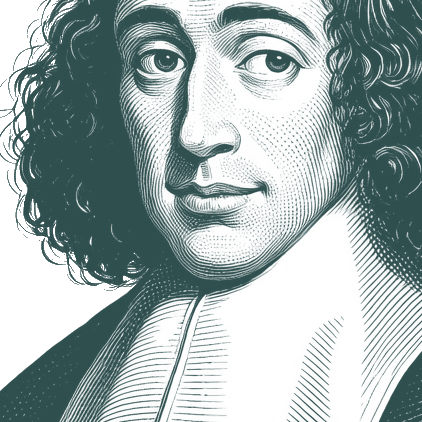
Benedictus de Spinoza (24 November 1632 – 21 February 1677) was a social and metaphysical philosopher known for the elaborate development of his monist philosophy, which has become known as Spinozism. Controversy regarding his ideas led to his excommunication from the Jewish community of his native Amsterdam. He was named Baruch ("blessed" in Hebrew) Spinoza by his synagogue elders and known as Bento de Spinoza or Bento d'Espiñoza, but afterwards used the name Benedictus ("blessed" in Latin) de Spinoza.
Native Name:
בָּרוּךְ שְׂפִּינוֹזָה
•
Benedito de Espinosa
Alternative Names:
Benedict de Spinoza
•
Baruch de Espinosa
•
Barukh Shpinozah
•
Benoît de Spinoza
•
Sbīnūzā
•
Ispīnūzā
•
Barukh Spinoza
•
Bento de Espinosa
•
Baruch d' Espinoza
•
Shpinozah
•
Baruch de Spinoza
•
Spinoza
•
Benoit de Spinoza
•
Benedictus De Spinoza
•
Benedictus Spinoza
•
Baruch Spinoza
•
Baruch Benedictus de Spinoza
Woe to him who in passing should hurl an insult at this gentle and pensive head. He would be punished, as all vulgar souls are punished, by his very vulgarity, and by his incapacity to conceive what is divine. This man, from his granite pedestal, will point out to all men the way of blessedness which he found; and ages hence, the cultivated traveler, passing by this spot, will say in his heart, "The truest vision ever had of God came, perhaps, here."
Spinoza: the absolute philosopher, whose Ethics is the foremost book on concepts.
PREMIUM FEATURE
Advanced Search Filters
Filter search results by source, date, and more with our premium search tools.
...To substitute the society of ideas for that of things is simply to live in the mind; it is to survey the world of existences in its truth and beauty rather than in its personal perspectives, or with practical urgency. It is the sole path to happiness for the intellectual man, because the intellectual man cannot be satisfied with a world of perpetual change, defeat, and imperfection. It is the path trodden by ancient philosophers and modern saints or poets; not, of course, by modern writers on philosophy (except Spinoza), because these have not been philosophers in the vital sense; they have practised no spiritual discipline, suffered no change of heart, but lived on exactly like other professors, and exerted themselves to prove the existence of a God favourable to their own desires, instead of searching for the God that happens to exist.