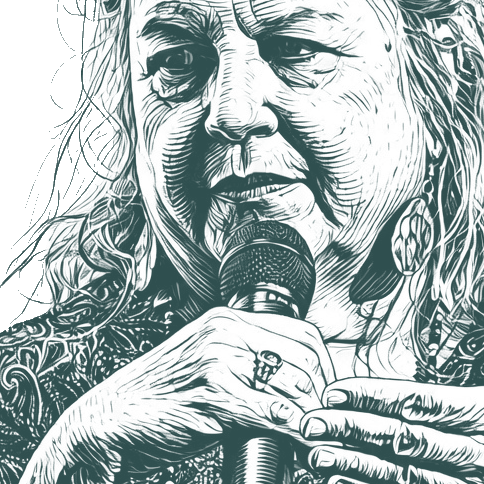
Old-growth cultures, like old-growth forests, have not been exterminated. The land holds their memory and the possibility of regeneration. They are n… - Robin Wall Kimmerer
""
Old-growth cultures, like old-growth forests, have not been exterminated. The land holds their memory and the possibility of regeneration. They are not only a matter of ethnicity or history, but of relationships born out of reciprocity between land and people.
English
Collect this quote
About
Robin Wall Kimmerer
Robin Wall Kimmerer (born September 13, 1953) is an enrolled member of the Citizen Potawatomi Nation who is the Distinguished Teaching Professor of Environmental and Forest Biology; and Director, Center for Native Peoples and the Environment, at the State University of New York College of Environmental Science and Forestry (SUNY-ESF). She is the author of numerous scientific articles, and the books Gathering Moss: A Natural and Cultural History of Mosses (2003), and Braiding Sweetgrass: Indigenous Wisdom, Scientific Knowledge and the Teachings of Plants (2013).
Biography information from
Wikiquote·
Portrait adapted from
Wikimedia Commons, Indiana Humanities (CC BY-SA)
It was the wild strawberries, beneath dewy leaves on an almost-summer morning, who gave me my sense of the world, my place in it. [...] Even now, after more than fifty Strawberry Moons, finding a patch of wild strawberries still touches me with a sensation of surprise, a feeling of unworthiness and gratitude for the generosity and kindness that comes with an unexpected gift all wrapped in red and green. "Really? For me? Oh, you shouldn't have." After fifty years they still raise the question of how to respond to their generosity. Sometimes it feels like a silly question with a very simple answer: eat them.
Our indigenous herbalists say to pay attention when plants come to you; they’re bringing you something you need to learn.
Enhance Your Quote Experience
Enjoy ad-free browsing, unlimited collections, and advanced search features with Premium.
We have constructed an artifice, a Potemkin village of an ecosystem where we perpetrate the illusion that the things we consume have just fallen off the back of Santa's sleigh, not been ripped from the earth. The illusion enables us to imagine that the only choices we have are between brands.