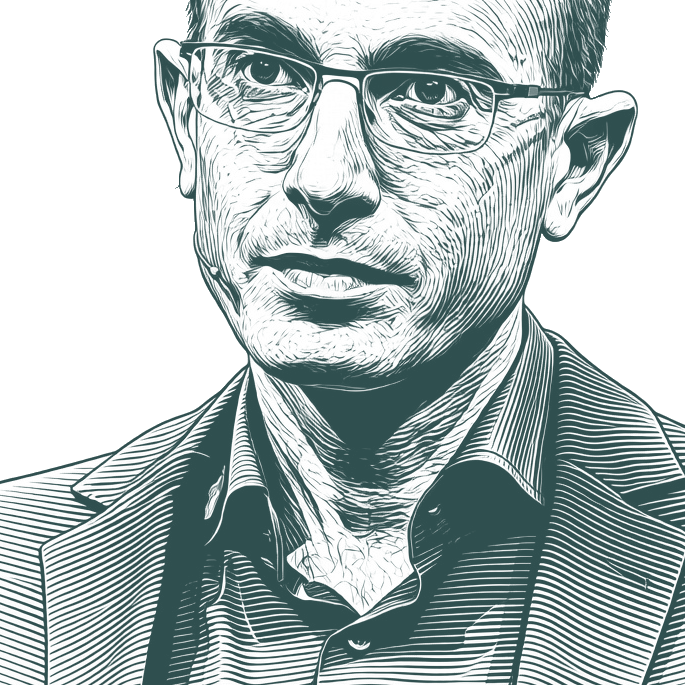
Secularism should not be equated with Stalinist dogmatism or with the bitter fruits of Western imperialism and runaway industrialisation. Yet it cann… - Yuval Noah Harari
""
Secularism should not be equated with Stalinist dogmatism or with the bitter fruits of Western imperialism and runaway industrialisation. Yet it cannot shirk all responsibility for them, either. Secular movements and scientific institutions have mesmerised billions with promises to perfect humanity and to utilise the bounty of planet Earth for the benefit of our species. Such promises resulted not just in overcoming plagues and famines, but also in gulags and melting ice caps. You might well argue that this is all the fault of people misunderstanding and distorting the core secular ideals and the true facts of science. And you are absolutely right. But that is a common problem for all influential movements. For example, Christianity has been responsible for great crimes such as the Inquisition, the Crusades, the oppression of native cultures across the world, and the disempowerment of women. A Christian might take offence at this and retort that all these crimes resulted from a complete misunderstanding of Christianity. Jesus preached only love, and the Inquisition was based on a horrific distortion of his teachings. We can sympathise with this claim, but it would be a mistake to let Christianity off the hook so easily. Christians appalled by the Inquisition and by the Crusades cannot just wash their hands of these atrocities – they should rather ask themselves some very tough questions. How exactly did their ‘religion of love’ allow itself to be distorted in such a way, and not once, but numerous times? Protestants who try to blame it all on Catholic fanaticism are advised to read a book about the behaviour of Protestant colonists in Ireland or in North America. Similarly, Marxists should ask themselves what it was about the teachings of Marx that paved the way to the Gulag, scientists should consider how the scientific project lent itself so easily to destabilising the global ecosystem, and geneticists in particular should take warning from the way the Nazis hijac
Yuval Noah Harari (Hebrew: יובל נח הררי; born 24 February 1976) is an Israeli professor of history at the Hebrew University of Jerusalem and the author of Sapiens: A Brief History of Humankind.
The fate of farm animals is not an ethical side issue. It concerns the majority of Earth's large creatures: tens of billions of sentient beings, each with a complex world of sensations and emotions, but who live and die as cogs in an industrial production line.
The so-called Facebook and Twitter revolutions in the Arab world started in hopeful online communities, but once they emerged into the messy offline world, they were commandeered by religious fanatics and military juntas.
PREMIUM FEATURE
Advanced Search Filters
Filter search results by source, date, and more with our premium search tools.
Centuries ago human knowledge increased slowly, so politics and economics changed at a leisurely pace too. Today our knowledge is increasing at breakneck speed, and theoretically we should understand the world better and better. But the very opposite is happening. Our new-found knowledge leads to faster economic, social and political changes; in an attempt to understand what is happening, we accelerate the accumulation of knowledge, which leads only to faster and greater upheavals. Consequently we are less and less able to make sense of the present or forecast the future. In 1016 it was relatively easy to predict how Europe would look in 1050. Sure, dynasties might fall, unknown raiders might invade, and natural disasters might strike; yet it was clear that in 1050 Europe would still be ruled by kings and priests, that it would be an agricultural society, that most of its inhabitants would be peasants, and that it would continue to suffer greatly from famines, plagues and wars. In contrast, in 2016 we have no idea how Europe will look in 2050. We cannot say what kind of political system it will have, how its job market will be structured, or even what kind of bodies its inhabitants will possess.