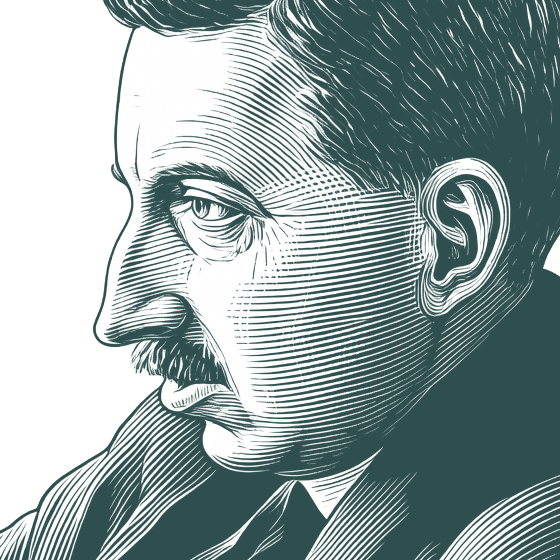
If human nature does alter it will be because individuals manage to look at themselves in a new way. Here and there people — a very few people, but a few novelists are among them — are trying to do this. Every institution and vested interest is against such a search: organized religion, the State, the family in its economic aspect, have nothing to gain, and it is only when outward prohibitions weaken that it can proceed: history conditions it to that extent. Perhaps the searchers will fail, perhaps it is impossible for the instrument of contemplation to contemplate itself, perhaps if it is possible it means the end of imaginative literature — [...] anyhow — that way lies movement and even combustion for the novel, for if the novelist sees himself differently, he will see his characters differently and a new system of lighting will result.
London was beginning to illuminate herself against the night. Electric lights sizzled and jagged in the main thoroughfares, gas-lamps in the side streets glimmered a canary gold or green. The sky was a crimson battlefield of spring, but London was not afraid. Her smoke mitigated the splendour, and the clouds down Oxford Street were a delicately painted ceiling, which adorned while it did not distract. She has never known the clear-cut armies of the purer air. Leonard hurried through her tinted wonders, very much part of the picture. His was a grey life, and to brighten it he had ruled off a few corners for romance.
Ronny’s religion was of the sterilized Public School brand, which never goes bad, even in the tropics. Wherever he entered, mosque, cave or temple, he retained the spiritual outlook of the fifth form, and condemned as ‘weakening’ any attempt to understand them.