« La vanité est si ancrée dans le cœur de l’homme qu’un soldat, un goujat, un cuisinier, un crocheteur se vante et veut avoir ses admirateurs ; et le… - Blaise Pascal
""
« La vanité est si ancrée dans le cœur de l’homme qu’un soldat, un goujat, un cuisinier, un crocheteur se vante et veut avoir ses admirateurs ; et les philosophes mêmes en veulent. Et ceux qui écrivent contre veulent avoir la gloire d’avoir bien écrit ; et ceux qui lisent veulent avoir la gloire de l’avoir lu ; et moi qui écris ceci, ai peut-être cette envie ».
French
Collect this quote
About
Blaise Pascal
Blaise Pascal (19 June 1623 – 19 August 1662) was a French mathematician, logician, physicist and theologian.
Biography information from
Wikiquote·
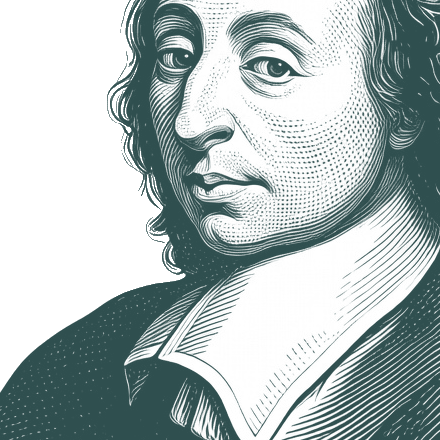
Portrait adapted from
Wikimedia Commons, unknown; a copy of the painting of François II Quesnel, which was made for Gérard Edelinck en 1691[réf. nécessaire]. (Public domain / CC0)
Also Known As
Pen Names:
Louis de Montalte
•
Amos Dettonville
•
Salomon de Tultie
Alternative Names:
Pascal
•
Dettonville
•
Paskal Blez
Portrait from Wikimedia Commons. Credit: unknown; a copy of the painting of François II Quesnel, which was made for Gérard Edelinck en 1691[réf. nécessaire].. Used under Public domain / CC0. Processed and styled by Quotewise.
Try QuoteGPT
Chat naturally about what you need. Each answer links back to real quotes with citations.
Related quotes. More quotes will automatically load as you scroll down, or you can use the load more buttons.
The source of the errors of these two sects, is in not having known that the state of man at the present time differs from that of his creation; so that the one, remarking some traces of his first greatness and being ignorant of his corruption, has treated nature as sound and without need of redemption, which leads him to the height of pride; whilst the other, feeling the present wretchedness and being ignorant of the original dignity, treats nature as necessarily infirm and irreparable, which precipitates it into despair of arriving at real good, and thence into extreme laxity.
What is it then that this desire and this inability proclaim to us, but that there was once in man a true happiness of which there now remain to him only the mark and empty trace, which he in vain tries to fill from all his surroundings, seeking from things absent the help he does not obtain in things present? But these are all inadequate, because the infinite abyss can only be filled by an infinite and immutable object, that is to say, only by God Himself.
Eloquence is painted thought, and thus those who, after having painted it, add somewhat more, make a picture, not a portrait.