Since the 1950s the history market is being flooded with publications conveying the negationist version to a greater or lesser extent. The public is … - Koenraad Elst
""
Since the 1950s the history market is being flooded with publications conveying the negationist version to a greater or lesser extent. The public is fed negationist TV serials like The Sword of Tipu Sultan, an exercise in whitewashing the arch-fanatic last Muslim ruler. Most general readers and many serious students only get to know about Indian history through negationist glasses.
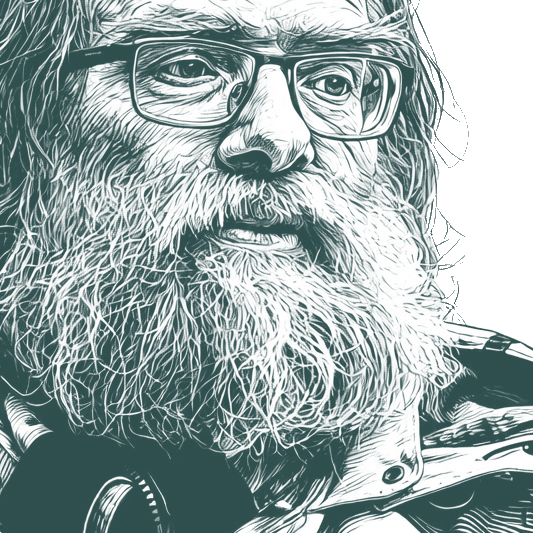
Koenraad Elst (born 7 August 1959) is a Flemish right wing Hindutva author, known primarily for his support of the Out of India theory and the Hindutva movement. Scholars have accused him of harboring Islamophobia.
Prof. B.B. Lal has formulated this conclusion on different occasions, including articles in Purâtitattva no. 16, 1987, and in Manthan, October 1990. In a letter to the Times of India, published on 1-3-1991, he concludes that “what is known as Ayodhya today was indeed the Ayodhya of the Valmiki Ramayana”.
We have looked into the pro and contra of some prima facie indications for an OIT of IE expansion. Probably none of these can presently be considered as decisive evidence against the AIT. But at least it has been shown that the linguistic evidence surveyed does not necessitate the AIT either. One after another, the classical proofs of a European origin have been discredited, usually by scholars who had no knowledge of or interest in an alternative Indian homeland theory.
The VHP-mandated scholars have, in their argumentation, pointed out no less than four attempts where scholars belonging to the anti-temple party have tried to conceal or destroy documentary evidence. Those are of course cases where the attempt failed because it was noticed in time, but the question must be asked how many similar attempts have succeeded.