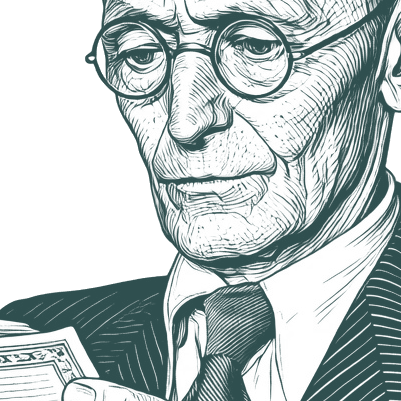
We were picking apart a problem in linguistic history and, as it were, examining close up the peak period of glory in the history of a language; in m… - Hermann Hesse
""
We were picking apart a problem in linguistic history and, as it were, examining close up the peak period of glory in the history of a language; in minutes we had traced the path which had taken it several centuries. And I was powerfully gripped by the vision of transitoriness: the way before our eyes such a complex, ancient, venerable organism, slowly built up over many generations, reaches its highest point, which already contains the germ of decay, and the whole intelligently articulated structure begins to droop, to degenerate, to totter toward its doom. And at the same time the thought abruptly shot through me, with a joyful, startled amazement, that despite the decay and death of that language it had not been lost, that its youth, maturity, and downfall were preserved in our memory, in our knowledge of it and its history, and would survive and could at any time be reconstructed in the symbols and formulas of scholarship as well as in the recondite formulations of the Glass Bead Game.
Hermann Karl Hesse (2 July 1877 – 9 August 1962) was a German-Swiss poet, novelist, and painter. In 1946, he received the Nobel Prize in Literature. His most famous works include Steppenwolf, Siddhartha, and The Glass Bead Game (also known as Magister Ludi) all of which explore an individual's search for spirituality.
Despair is the result of each earnest attempt to go through life with virtue, justice and understanding, and to fulfill their requirements. Children live on one side of despair, the awakened on the other side.
When I have neither pleasure nor pain and have been breathing for a while the lukewarm insipid air of these so called good and tolerable days, I feel so bad in my childish soul that I smash my moldering lyre of thanksgiving in the face of the slumbering god of contentment and would rather feel the very devil burn in me than this warmth of a well-heated room. A wild longing for strong emotions and sensations seethes in me, a rage against this toneless, flat, normal and sterile life. I have a mad impulse to smash something, a warehouse, perhaps, or a cathedral, or myself, to commit outrages, to pull off the wigs of a few revered idols...
Unlimited Quote Collections
Organize your favorite quotes without limits. Create themed collections for every occasion with Premium.