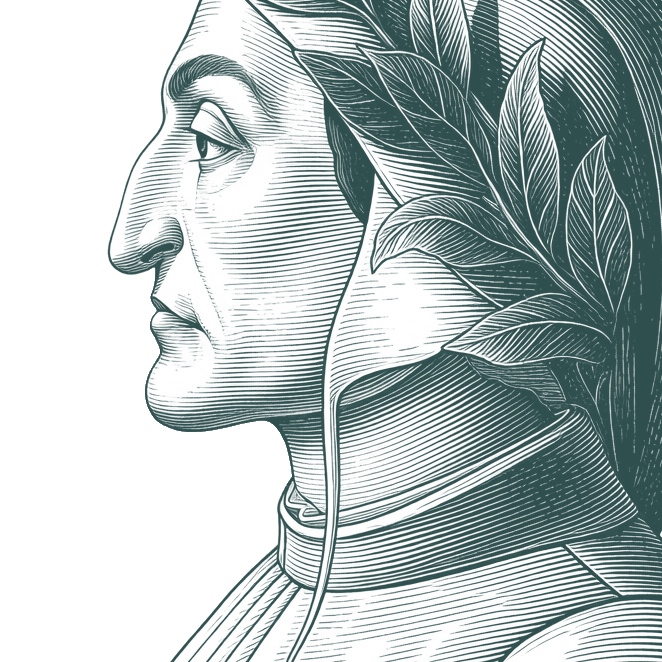
Dante Alighieri (c. 30 May 1265 – 13 September 1321), most likely baptized Durante di Alighiero degli Alighieri, was an Italian poet, writer and philosopher. His Divine Comedy, originally called Comedìa (modern Italian: Commedia) and later christened Divina by Giovanni Boccaccio, is widely considered one of the most important poems of the Middle Ages and the greatest literary work in the Italian language.
Biography information from
Wikiquote·
Portrait adapted from
Wikimedia Commons, Sandro Botticelli (Public domain / CC0)
Also Known As
Alternative Names:
Dante
•
Durante degli Alighieri
•
Durante di Alighiero degli Alighieri
Only those elements time cannot wear: The Angels, the Empyrean, and the First Matter are the elements time cannot wear, for they will last to all time. Man, however, in his mortal state, is not eternal. The Gate of Hell, therefore, was created before man. The theological point is worth attention. The doctrine of Original Sin is, of course, one familiar to many creeds. Here, however, it would seem that the preparation for damnation predates Original Sin. True, in one interpretation. Hell was created for the punishment of the Rebellious Angels and not for man. Had man not sinned, he would never have known Hell. But on the other hand, Dante’s God was one who knew all, and knew therefore that man would indeed sin. The theological problem is an extremely delicate one.
"Incipit vita nuova"... Yeni bir yaşam başladı...
Go Premium
Support Quotewise while enjoying an ad-free experience and premium features.
"[Sonetto VIII] Ciò che m’incontra, ne la mente more, quand’i’ vegno a veder voi, bella gioia; e quand’io vi son presso, i’ sento Amore che dice: "Fuggi, se ’l perir t’è noia".
Lo viso mostra lo color del core, che, tramortendo, ovunque pò s’appoia; e per la ebrietà del gran tremore le pietre par che gridin: Moia, moia.
Peccato face chi allora mi vide, se l’alma sbigottita non conforta, sol dimostrando che di me li doglia, per la pietà, che ’l vostro gabbo ancide, la qual si cria ne la vista morta de li occhi, c’hanno di lor morte voglia."