In other centuries, human beings wanted to be saved, or improved, or freed, or educated. But in our century, they want to be entertained. The great f… - Michael Crichton
""
In other centuries, human beings wanted to be saved, or improved, or freed, or educated. But in our century, they want to be entertained. The great fear is not of disease or death, but of boredom. A sense of time on our hands, a sense of nothing to do. A sense that we are not amused.
John Michael Crichton (pronounced [kraɪtən]) (23 October 1942 – 4 November 2008) was an American best-selling author, physician, producer, director and screenwriter, best known for his work in the science fiction, medical fiction and thriller genres. His books have sold over 200 million copies worldwide, and many have been adapted into films.
Biography information from
Wikiquote·
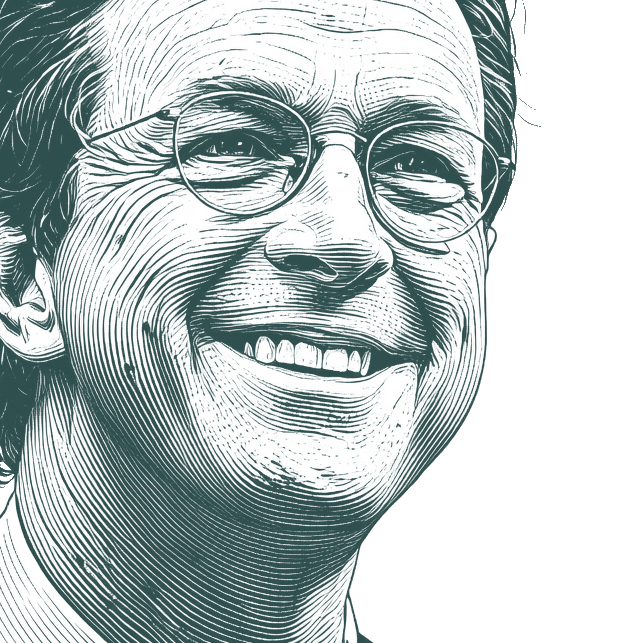
Portrait adapted from
Wikimedia Commons, Jon Chase photo/Harvard News Office (CC BY-SA)
Also Known As
Pen Names:
Michael Douglas
•
Jeffery Hudson
•
John Lange
But where will this mania for entertainment end? What will people do when they get tired of television? When they get tired of movies? We already know the answer—they go into participatory activities: sports, theme parks, amusement rides, roller coasters. Structured fun, planned thrills. And what will they do when they tire of theme parks and planned thrills? Sooner or later, the artifice becomes too noticeable. They begin to realize that an amusement park is really a kind of jail, in which you pay to be an inmate.
He thought again about the poison. He remembered that one of the animal handlers had been bitten by a compy in a cage. The handler had said the poison was like a narcotic — peaceful, dreamy. No pain. You just wanted to go to sleep. The hell with that, he thought. Hammond picked up a rock, aimed carefully, and threw it, striking one compy flat in the chest. The little animal shrieked in alarm as it was knocked backward, and rolled over its tail. The other animals immediately backed away. Better. Hammond turned away, and started to climb the hill once more. Holding branches in both hands, he hopped on his left leg, feeling the ache in his thigh. He had not gone more than ten feet when one of the compys jumped onto his back. He flung his arms wildly, knocking the animal away, but lost his balance and slid back down the hillside. As he came to a stop, a second compy sprang forward, and took a tiny nip from his hand. He looked with horror, seeing the blood flow over his fingers. He turned and began to scramble up the hillside again. Another compy jumped onto his shoulder, and he felt a brief pain as it bit the back of his neck. He shrieked and smacked the animal away. He turned to face the animals, breathing hard, and they stood all around him, hopping up and down and cocking their heads, watching him. From the bite on his neck, he felt warmth flow through his shoulders, down his spine. Lying on his back on the hillside, he began to feel strangely relaxed, detached from himself. But he realized that nothing was wrong. No error had been made. Malcolm was quite incorrect in his analysis. Hammond lay very still, as still as a child in its crib, and he felt wonderfully peaceful. When the next compy came up and bit his ankle, he made only a halfhearted effort to kick it away. The little animals edged closer. Soon they were chittering all around him, like excited birds. He raised his head as another compy jumped onto his chest, the animal surprisingly light and delicate.
Unlimited Quote Collections
Organize your favorite quotes without limits. Create themed collections for every occasion with Premium.
You would think that people who had experienced injustice would be loath to inflict it on others, and yet they do so with alacrity. The victims become the victimizers with a chilling righteousness. This is the nature of fanaticism, to attract and provoke extremes of behavior. And this is why fanatics are all the same, whatever specific form their fanaticism takes.