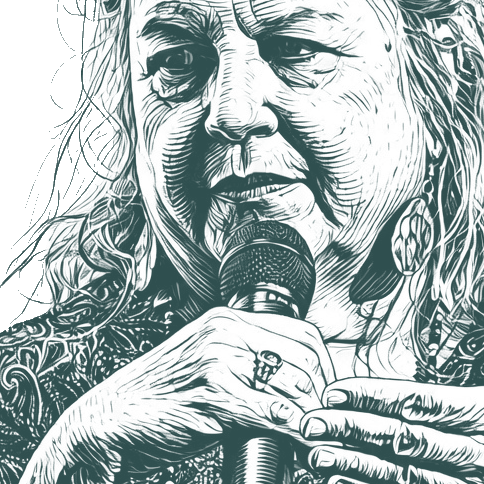
there was no question but that I’d study botany in college. It was my passion — still is, of course. But the botany that I encountered there was so d… - Robin Wall Kimmerer
""
there was no question but that I’d study botany in college. It was my passion — still is, of course. But the botany that I encountered there was so different than the way that I understood plants. Plants were reduced to object. What was supposedly important about them was the mechanism by which they worked, not what their gifts were, not what their capacities were. They were really thought of as objects, whereas I thought of them as subjects. And that shift in worldview was a big hurdle for me, in entering the field of science.
English
Collect this quote
About
Robin Wall Kimmerer
Robin Wall Kimmerer (born September 13, 1953) is an enrolled member of the Citizen Potawatomi Nation who is the Distinguished Teaching Professor of Environmental and Forest Biology; and Director, Center for Native Peoples and the Environment, at the State University of New York College of Environmental Science and Forestry (SUNY-ESF). She is the author of numerous scientific articles, and the books Gathering Moss: A Natural and Cultural History of Mosses (2003), and Braiding Sweetgrass: Indigenous Wisdom, Scientific Knowledge and the Teachings of Plants (2013).
Biography information from
Wikiquote·
Portrait adapted from
Wikimedia Commons, Indiana Humanities (CC BY-SA)
The presence of our reciprocal love is hard to say good-bye to.
Getting scientists to consider the validity of indigenous knowledge is like swimming upstream in cold, cold water. They’ve been so conditioned to be skeptical of even the hardest of hard data that bending their minds toward theories that are verified without the expected graphs or equations is tough. Couple that with the unblinking assumption that science has cornered the market on truth and there’s not much room for discussion.
What is it that brings me here to stand like a rock in this river of sound?