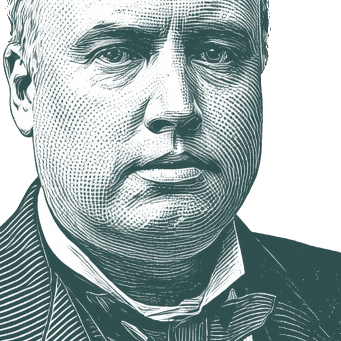
I do not believe in the government of the lash, if any one of you ever expects to whip your children again, I want you to have a photograph taken of … - Robert Green Ingersoll
""
I do not believe in the government of the lash, if any one of you ever expects to whip your children again, I want you to have a photograph taken of yourself when you are in the act, with your face red with vulgar anger, and the face of the little child, with eyes swimming in tears and the little chin dimpled with fear, like a piece of water struck by a sudden cold wind. Have the picture taken. If that little child should die, I cannot think of a sweeter way to spend an autumn afternoon than to go out to the cemetery, when the maples are clad in tender gold, and little scarlet runners are coming, like poems of regret, from the sad heart of the earth — and sit down upon the grave and look at that photograph, and think of the flesh now dust that you beat. I tell you it is wrong; it is no way to raise children! Make your home happy. Be honest with them. Divide fairly with them in everything.
Robert Green Ingersoll (August 11, 1833 – July 21, 1899) was a lawyer, a Civil War veteran, political leader, and orator of the United States during the Golden Age of Freethought, noted for his broad range of culture and his defense of agnosticism. He was nicknamed "The Great Agnostic".
Biography information from
Wikiquote·
Portrait adapted from
Wikimedia Commons, Mathew Benjamin Brady / Levin Corbin Handy (Public domain / CC0)
Also Known As
Alternative Names:
Robert Ingersoll
•
The Great Agnostic
•
Robert G. Ingersoll
They insist that for the glory of God, husbands and wives who loathe each other should be compelled to live together. They abhor all works of fiction, and love the Bible.
Let us account for all we see by the facts we know. If there are things for which we cannot account, let us wait for light. To account for anything by supernatural agencies is, in fact to say that we do not know. Theology is not what we know about God, but what we do not know about Nature.
Try QuoteGPT
Chat naturally about what you need. Each answer links back to real quotes with citations.
Disease was produced by devils and could be cured only by priests, decaying bones, and holy water. Doctors were the rivals of priests. They diverted the revenues. The church opposed the study of anatomy—was against the dissection of the dead. Man had no right to cure disease—God would do that through his priests. Man had no right to prevent disease—diseases were sent by God as judgments. The church opposed inoculation—vaccination, and the use of chloroform and ether. It was declared to be a sin, a crime for a woman to lessen the pangs of motherhood. The church declared that woman must bear the curse of the merciful Jehovah. What has the church done? It taught that the insane were inhabited by devils. Insanity was not a disease. It was produced by demons. It could be cured by prayers—gifts, amulets and charms. All these had to be paid for. This enriched the church. These ideas were honestly entertained by Protestants as well as Catholics—by Luther, Calvin, Knox and Wesley.