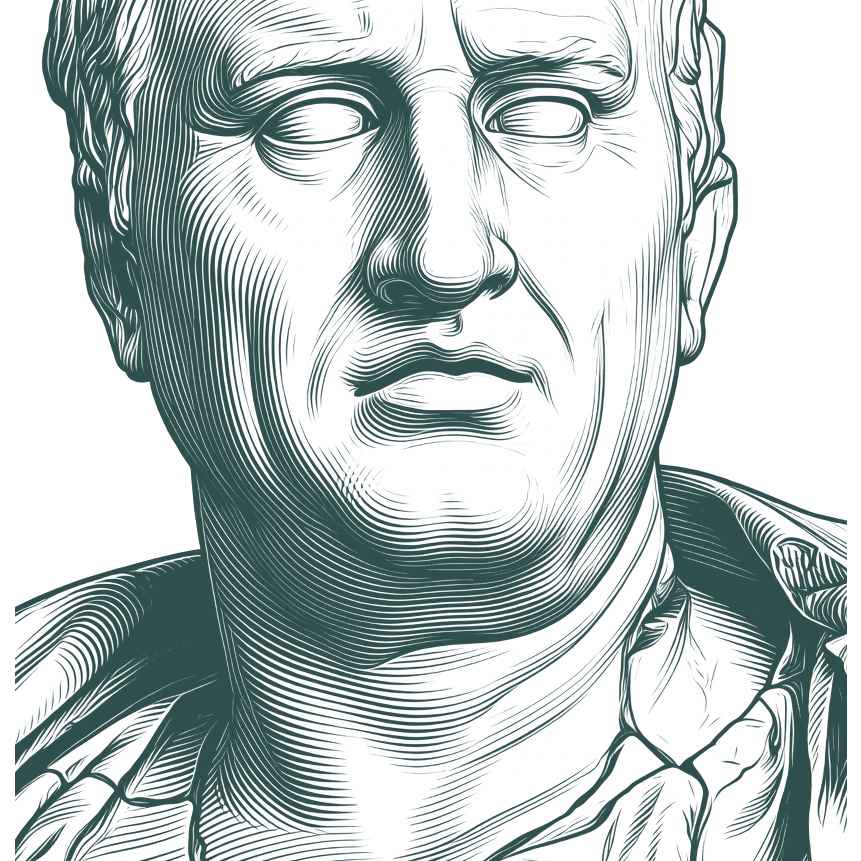
Age et his vocabulis esse deos facimus quibus a nobis nominantur? At primum, quot hominum linguae, tot nomina deorum. Non enim, ut tu Velleius, quocu… - Cicero
""
Age et his vocabulis esse deos facimus quibus a nobis nominantur? At primum, quot hominum linguae, tot nomina deorum. Non enim, ut tu Velleius, quocumque veneris, sic idem in Italia, idem in Africa, idem in Hispania.
Latin
Collect this quote
About
Cicero
Marcus Tullius Cicero (3 January 106 BC – 7 December 43 BC), infrequently known by the anglicized name Tully in the Middle Ages and after, was a Roman philosopher, politician, lawyer, orator, political theorist, consul and constitutionalist. He came from a wealthy municipal family of the Roman equestrian order, and is widely considered one of Rome's greatest orators and prose stylists.
The greatest states have been overthrown by the young and sustained and restored by the old. ... Rashness is the product of the budding-time of youth, prudence of the harvest-time of age.
Calamus fortior gladio.
"As for myself, I can only exhort you to look on Friendship as the most valuable of all human possessions, no other being equally suited to the moral nature of man, or so applicable to every state and circumstance, whether of prosperity or adversity, in which he can possibly be placed. But at the same time I lay it down as a fundamental axiom that "true Friendship can only subsist between those who are animated by the strictest principles of honour and virtue." When I say this, I would not be thought to adopt the sentiments of those speculative moralists who pretend that no man can justly be deemed virtuous who is not arrived at that state of absolute perfection which constitutes, according to their ideas, the character of genuine wisdom. This opinion may appear true, perhaps, in theory, but is altogether inapplicable to any useful purpose of society, as it supposes a degree of virtue to which no mortal was ever capable of rising."