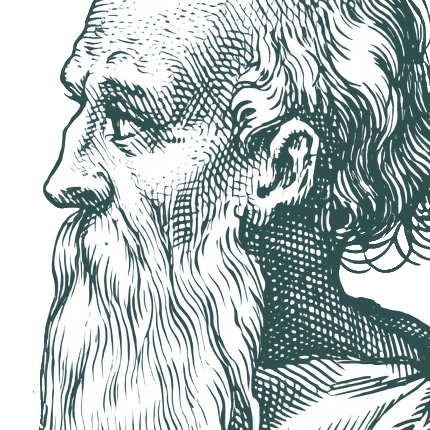
The essence of the good is a certain kind of moral purpose, and that of the evil is a certain kind of moral purpose. - Epictetus
""
The essence of the good is a certain kind of moral purpose, and that of the evil is a certain kind of moral purpose.
English
Collect this quote
About
Epictetus
Epictetus (c. 55 – c. 135 AD), born a slave, was a Greek Stoic philosopher. His words were recorded by his student Arrian in the Discourses and Enchiridion written in the early 2nd-century.
Biography information from
Wikiquote·
Portrait adapted from
Wikimedia Commons, Theodoor Galle (Public domain / CC0)
Also Known As
Native Name:
ΕΠΙΚΤΗΤΟΣ
Alternative Names:
Epictetus of Hierapolis
•
Epiktetos
Some things are in our control and others not. Things in our control are opinion, pursuit, desire, aversion, and, in a word, whatever are our own actions. Things not in our control are body, property, reputation, command, and, in one word, whatever are not our own actions. The things in our control are by nature free, unrestrained, unhindered; but those not in our control are weak, slavish, restrained, belonging to others. Remember, then, that if you suppose that things which are slavish by nature are also free, and that what belongs to others is your own, then you will be hindered. You will lament, you will be disturbed, and you will find fault both with gods and men. But if you suppose that only to be your own which is your own, and what belongs to others such as it really is, then no one will ever compel you or restrain you. Further, you will find fault with no one or accuse no one. You will do nothing against your will. No one will hurt you, you will have no enemies, and you not be harmed. Aiming therefore at such great things, remember that you must not allow yourself to be carried, even with a slight tendency, towards the attainment of lesser things. Instead, you must entirely quit some things and for the present postpone the rest. But if you would both have these great things, along with power and riches, then you will not gain even the latter, because you aim at the former too: but you will absolutely fail of the former, by which alone happiness and freedom are achieved. Work, therefore to be able to say to every harsh appearance, “You are but an appearance, and not absolutely the thing you appear to be.” And then examine it by those rules which you have, and first, and chiefly, by this: whether it concerns the things which are in our own control, or those which are not; and, if it concerns anything not in our control, be prepared to say that it is nothing to you.
Whether human affairs are directed by Fate’s unalterable necessity, or by chance, is a question. The wisest of philosophers disagree on this point. [Epicureans] insist that heaven is unconcerned with our birth and death – is unconcerned, in fact, with human beings generally – with the result that good people often suffer while wicked people thrive. [The Stoics] disagree, maintaining that although things happen according to fate, this depends not on the movement of the planets but on the principles and logic of natural causality. This school concedes to us the freedom to choose our own lives. Once the choice is made, however, the Stoics warn that the subsequent sequence of events cannot be altered. With regard to practical matters they maintain that popular ideas of good and bad are wrong: many people who appear to be in dire circumstances are actually happy provided they deal with their situation bravely; others, regardless of how many possessions they have, are miserable, because they do not know how to use the gifts of fortune wisely.
Works in ChatGPT, Claude, or Any AI
Add semantic quote search to your AI assistant via MCP. One command setup.