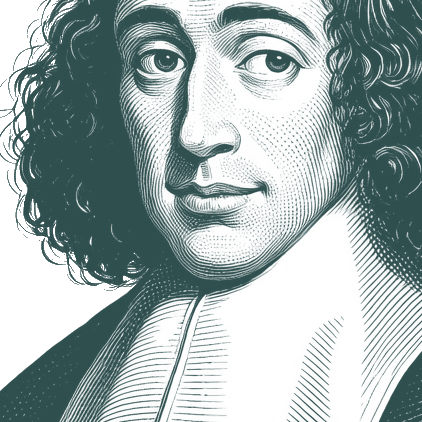
Hay hombres cuyo espíritu es completamente ciego, sea de nacimiento o por prejuicios, es decir, debido a algo externo. En efecto, ni siquiera poseen … - Benedictus de Spinoza
""
Hay hombres cuyo espíritu es completamente ciego, sea de nacimiento o por prejuicios, es decir, debido a algo externo. En efecto, ni siquiera poseen conciencia de si mismos: si afirman cualquier cosa o dudan de ella, no saben que afirman o que dudan; dicen que no saben nada y hasta declaran ignorar que no saben nada; esto mismo lo dicen con restricción, pues temen confesar que existen, puesto que como nada saben, deben callar por temor de admitir algo que huela a verdad. En definitiva, es preciso abstenerse de hablar de ciencias con ellos (pues en lo concerniente a la vida y a la sociedad la necesidad les fuerza a reconocer su propia existencia, a buscar lo que les es útil, a afirmar y a negar bajo juramento muchas cosas). En efecto, si se les prueba algo, no saben si la argumentación es probatoria o defectuosa; si niegan, conceden u oponen una objeción, no saben que niegan, conceden u objetan; hay que considerarlos, pues, como autómatas enteramente desprovistos de pensamiento.
Benedictus de Spinoza (24 November 1632 – 21 February 1677) was a social and metaphysical philosopher known for the elaborate development of his monist philosophy, which has become known as Spinozism. Controversy regarding his ideas led to his excommunication from the Jewish community of his native Amsterdam. He was named Baruch ("blessed" in Hebrew) Spinoza by his synagogue elders and known as Bento de Spinoza or Bento d'Espiñoza, but afterwards used the name Benedictus ("blessed" in Latin) de Spinoza.
Native Name:
בָּרוּךְ שְׂפִּינוֹזָה
•
Benedito de Espinosa
Alternative Names:
Benedict de Spinoza
•
Baruch de Espinosa
•
Barukh Shpinozah
•
Benoît de Spinoza
•
Sbīnūzā
•
Ispīnūzā
•
Barukh Spinoza
•
Bento de Espinosa
•
Baruch d' Espinoza
•
Shpinozah
•
Baruch de Spinoza
•
Spinoza
•
Benoit de Spinoza
•
Benedictus De Spinoza
•
Benedictus Spinoza
•
Baruch Spinoza
•
Baruch Benedictus de Spinoza
We can conceive of various kinds of democracy. But my intention is not to treat of every kind, but of that only, "wherein all, without exception, who owe allegiance to the laws of the country only, and are further independent and of respectable life, have the right of voting in the supreme council and of filling the offices of the dominion."
Neutrality toward Spinoza set in once one was able to admit that the "modern worldview," whose victory was decisively aided by Spinoza's metaphysics, does not, or does not entirely, coincide with this metaphysics. But even at this stage it was still generally maintained, and even emphasized, that among the three great Western philosophers of the seventeenth century — Descartes, Hobbes, and Spinoza — Spinoza was the most important one because, he was the most progressive one. He alone had drawn certain consequences from the foundations of modern philosophy, which became fully clarified only in the nineteenth century and which henceforth determined the general consciousness.
Unlimited Quote Collections
Organize your favorite quotes without limits. Create themed collections for every occasion with Premium.