Everything is change. Nothing can be held on to. And if you go with the flux, you flow with it. However, if you resist the stream, it fights you. If you realize this, you swim with the flow — you go with it, and you’re at peace. This is particularly true when it comes to those moments when life really seems to be taking us away, and the stream of change is going to swallow us completely. And so at the moment of death, we withdraw and say, “No, no, no! Not that! Not yet!” But the whole problem is that we don’t realize that the only thing to do when that moment comes is to go over the waterfall — just as you go on from one day to the next, just as you go to sleep at night. When the moment comes, we should be absolutely willing to die.
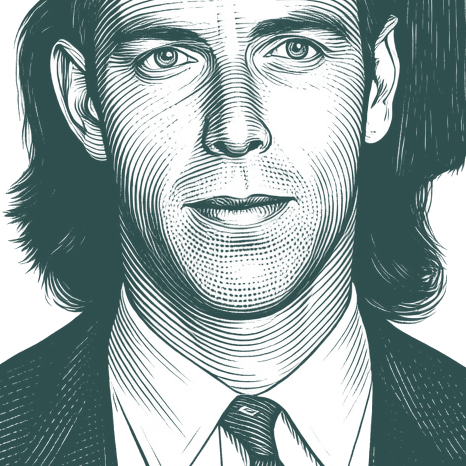
British American author and lecturer (1915–1973)
Alan Wilson Watts (6 January 1915 – 16 November 1973) was an English philosopher, writer, speaker, and expert in comparative religion.
Bio from: Wikiquote (CC BY-SA 4.0) · Portrait adapted from: Wikimedia Commons, The University of Vermont Alumni Magazine vol. 39 no. 01, p. 22. (Public domain / CC0)
Alternative Names:
Alan Wilson Watts
•
Alan W. Watts
From Wikidata (CC0)

So you see, if you become aware of the fact that you are all of your own body, and that the
beating of your heart is not just something that happens to you, but something you're doing,
then you become aware also in the same moment and at the same time that you're not only
beating your heart, but that you are shining the sun. Why? Because the process of your
bodily existence and its rhythms is a process, an energy system which is continuous with the
shining of the sun, just like the East River, here, is a continuous energy system, and all the
waves in it are activities of the whole East River, and that's continuous with the Atlantic
Ocean, and that's all one energy system and finally the Atlantic ocean gets around to being
the Pacific Ocean and the Indian Ocean, etc., and so all the waters of the Earth are a
continuous energy system. It isn't just that the East River is part of it. You can't draw any
line and say 'Look, this is where the East River ends and the rest of it begins,' as if you can
in the parts of an automobile, where you can say 'This is definitely part of the generator,here, and over here is a spark plug.' There's not that kind of isolation between the elements
of nature.
Unlimited Quote Collections
Organize your favorite quotes without limits. Create themed collections for every occasion with Premium.
As you make more and more powerful microscopic instruments, the universe has to get smaller and smaller in order to escape the investigation. Just as when the telescopes become more and more powerful, the galaxies have to recede in order to get away from the telescopes. Because what is happening in all these investigations is this: Through us and through our eyes and senses, the universe is looking at itself. And when you try to turn around to see your own head, what happens? It runs away. You can't get at it. This is the principle. Shankara explains it beautifully in his commentary on the Kenopanishad where he says 'That which is the Knower, the ground of all knowledge, is never itself an object of knowledge.'
[In this quote from 1973 Watts, remarkably, essentially anticipates the discovery (in the late 1990's) of the acceleration of the expansion of the universe.]
To the Taoist mentality, the aimless, empty life does not suggest anything depressing. On the contrary, it suggests the freedom of clouds and mountain streams, wandering nowhere, of flowers in impenetrable canyons, beautiful for no one to see, and of the ocean surf forever washing the sand, to no end.
Try QuoteGPT
Chat naturally about what you need. Each answer links back to real quotes with citations.
If the human race develops an electronic nervous system, outside the bodies of individual people, thus giving us all one mind and one global body, this is almost precisely what has happened in the organization of cells which compose our own bodies. We have already done it. [...] If all this ends with the human race leaving no more trace of itself in the universe than a system of electronic patterns, why should that trouble us? For that is exactly what we are now!
A particularly significant example of brain against body, or measures against matter, is urban man’s total slavery to clocks. A clock is a convenient device for arranging to meet a friend, or for helping people to do things together, although things of this kind happened long before they were invented. Clocks should not be smashed; they should simply be kept in their place. And they are very much out of place when we try to adapt our biological rhythms of eating, sleeping, evacuation, working, and relaxing to their uniform circular rotation. Our slavery to these mechanical drill masters has gone so far and our whole culture is so involved with it that reform is a forlorn hope; without them civilization would collapse entirely. A less brainy culture would learn to synchronize its body rhythms rather than its clocks.
When it comes down to it, government is simply an abandonment of responsibility on the assumption that there are people, other than ourselves, who really know how to manage things. But the government, run ostensibly for the good of the people, becomes a self-serving corporation. To keep things under control, it proliferates law of ever-increasing complexity and unintelligibility, and hinders productive work by demanding so much accounting on paper that the record of what has been done becomes more important than what has actually been done. [...] The Taoist moral is that people who mistrust themselves and one another are doomed.