British American author and lecturer (1915–1973)
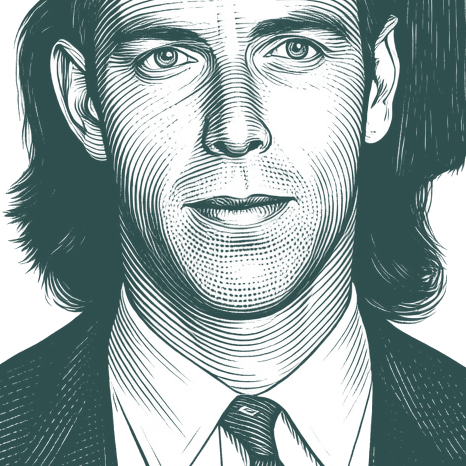
Alan Wilson Watts (6 January 1915 – 16 November 1973) was an English philosopher, writer, speaker, and expert in comparative religion.
Bio from: Wikiquote (CC BY-SA 4.0) · Portrait adapted from: Wikimedia Commons (Public domain / CC0)
From Wikidata (CC0)

"Here's an example: someone says, "Master, please hand me the knife," and he hands them the knife, blade first. "Please give me the other end," he says. And the master replies, "What would you do with the other end?" This is answering an everyday matter in terms of the metaphysical.
When the question is, "Master, what is the fundamental principle of Buddhism?" Then he replies, "There is enough breeze in this fan to keep me cool." That is answering the metaphysical in terms of the everyday, and that is, more or less, the principle zen works on. The mundane and the sacred are one and the same."
"We suffer from a hallucination, from a false and distorted sensation of our own existence as living organisms. Most of us have the sensation that "I myself" is a separate center of feeling and action, living inside and bounded by the physical body — a center which "confronts" an "external" world of people and things, making contact through the senses with a universe both alien and strange. Everyday figures of speech reflect this illusion. "I came into this world." "You must face reality." "The conquest of nature." This feeling of being lonely and very temporary visitors in the universe is in flat contradiction to everything known about man (and all other living organisms) in the sciences. We do not "come into" this world; we come out of it, as leaves from a tree. As the ocean "waves," the universe "peoples." Every individual is an expression of the whole realm of nature, a unique action of the total universe. This fact is rarely, if ever, experienced by most individuals. Even those who know it to be true in theory do not sense or feel it, but continue to be aware of themselves as isolated "egos" inside bags of skin."
The startling truth is that our best efforts for civil rights, international
peace, population control, conservation of natural resources, and
assistance to the starving of the earth — urgent as they are — will destroy
rather than help if made in the present spirit. For, as things stand, we
have nothing to give. If our own riches and our own way of life are not
enjoyed here, they will not be enjoyed anywhere else. Certainly they
will supply the immediate jolt of energy and hope that methedrine, and
similar drugs, give in extreme fatigue. But peace can be made only by
those who are peaceful, and love can be shown only by those who love.
No work of love will flourish out of guilt, fear, or hollowness of heart,
just as no valid plans for the future can be made by those who have no
capacity for living now.
We are living in a culture entirely hypnotized by the illusion of time, in which the so-called present moment is felt as nothing but an infinitesimal hairline between an all-powerfully causative past and an absorbingly important future. We have no present. Our consciousness is almost completely preoccupied with memory and expectation. We do not realize that there never was, is, nor will be any other experience than present experience. We are therefore out of touch with reality. We confuse the world as talked about, described, and measured with the world which actually is. We are sick with a fascination for the useful tools of names and numbers, of symbols, signs, conceptions and ideas.
Works in ChatGPT, Claude, or Any AI
Add semantic quote search to your AI assistant via MCP. One command setup.
Whether we like it or not, change comes, and the greater the resistance, the greater the pain. Buddhism perceives the beauty of change, for life is like music in this: if any note or phrase is held for longer than its appointed time, the melody is lost. Thus Buddhism may be summed up in two phrases: “Let go!” and “Walk on!” Drop the craving for self, for permanence, for particular circumstances, and go straight ahead with the movement of life.
"But nirvana is a radical transformation of how it feels to be alive: it feels as if everything were myself, or as if everything — -including "my" thoughts and actions — -were happening of itself. There are still efforts, choices, and decisions, but not the sense that "I make them"; they arise of themselves in relation to circumstances. This is therefore to feel life, not as an encounter between subject and object, but as a polarized field where the contest of opposites has become the play of opposites."
"For there is no joy in continuity, in the perpetual. We desire it only because the present is empty. A person who is trying to eat money is always hungry. When someone says, "Time to stop now!" he is in a panic because he has had nothing to eat yet, and wants more and more time to go on eating money, ever hopeful of satisfaction around the corner. We do not really want continuity, but rather a present experience of total happiness. The thought of wanting such an experience to go on and on is a result of being self-conscious in the experience, and thus incompletely aware of it. So long as there is the feeling of an "I" having this experience, the moment is not all. Eternal life is realized when the last trace of difference between "I" and "now" has vanished - when there is just this "now" and nothing else.
By contrast, hell or "everlasting damnation" is not the everlastingness of time going on forever, but of the unbroken circle, the continuity and frustration of going round and round in pursuit of something which can never be attained. Hell is the fatuity, the everlasting impossibility, of self-love, self-consciousness, and seld-possession. It is trying to see one´s own eyes, hear one´s own ears, and kiss one´s own lips."