The true splendor of science is not so much that it names and classifies, records and predicts, but that it observes and desires to know the facts, whatever they may turn out to be. However much it may confuse facts with conventions, and reality with arbitrary divisions, in this openness and sincerity of mind it bears some resemblance to religion, understood in its other and deeper sense. The greater the scientist, the more he is impressed with his ignorance of reality, and the more he realizes that his laws and labels, descriptions and definitions, are the products of his own thought. They help him to use the world for purposes of his own devising rather than to understand and explain it. The more he analyzes the universe into infinitesimals, the more things he finds to classify, and the more he perceives the relativity of all classification. What he does not know seems to increase in geometric progression to what he knows. Steadily he approaches the point where what is unknown is not a mere blank space in a web of words but a window in the mind, a window whose name is not ignorance but wonder.
British American author and lecturer (1915–1973)
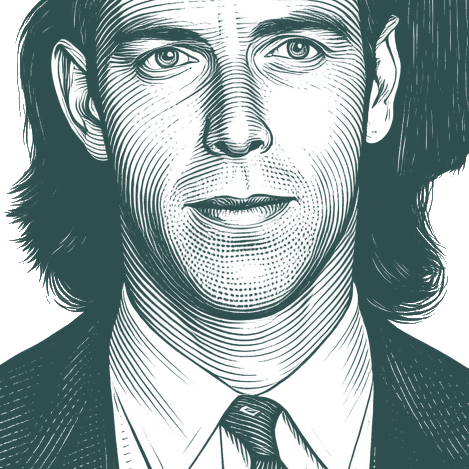
Alan Wilson Watts (6 January 1915 – 16 November 1973) was an English philosopher, writer, speaker, and expert in comparative religion.
Bio from: Wikiquote (CC BY-SA 4.0) · Portrait adapted from: Wikimedia Commons, The University of Vermont Alumni Magazine vol. 39 no. 01, p. 22. (Public domain / CC0)
Alternative Names:
Alan Wilson Watts
•
Alan W. Watts
From Wikidata (CC0)

"Look, here is a tree in the garden and every summer is produces apples, and we call it an apple tree because the tree "apples." That's what it does. Alright, now here is a solar system inside a galaxy, and one of the peculiarities of this solar system is that at least on the planet earth, the thing peoples! In just the same way that an apple tree apples!"
Belief…is the insistence that the truth is what one would ‘lief’ or (will or) wish to be…Faith is an unreserved opening of the mind to the truth, whatever it may turn out to be. Faith has no preconceptions; it is a plunge into the unknown. Belief clings, but faith let’s go…faith is the essential virtue of science, and likewise of any religion that is not self-deceptio
Zen Buddhism is a way and a view of life which does not belong to any of the formal categories of modern Western thought. It is not religion or philosophy; it is not a psychology or a type of science. It is an example of what is known in India and China as a “way of liberation,” and is similar in this respect to Taoism, Vedanta, and Yoga. As will soon be obvious, a way of liberation can have no positive definition. It has to be suggested by saying what it is not, somewhat as a sculptor reveals an image by the act of removing pieces of stone from a block.
If we get rid of all wishful thinking and dubious metaphysical speculations, we can hardly doubt that – at a time not too distant – each one of us will simply cease to be. It won’t be like going into darkness forever, for there will be neither darkness, nor time, nor sense of futility, nor anyone to feel anything about it. Try as best you can to imagine this, and keep at it. The universe will, supposedly, be going on as usual, but for each individual it will be as if it had never happened at all; and even that is saying too much, because there won’t be anyone for whom it never happened. Make this prospect as real as possible: the one total certainty. You will be as if you had never existed, which was, however, the way you were before you did exist – and not only you but everything else. Nevertheless, with such an improbable past, here we are. We begin from nothing and end in nothing. You can say that again. Think it over and over, trying to conceive the fact of coming to never having existed. After a while you will begin to feel rather weird, as if this very apparent something that you are is at the same time nothing at all. Indeed, you seem to be rather firmly and certainly grounded in nothingness, much as your sight seems to emerge from that total blankness behind your eyes. The weird feeling goes with the fact that you are being introduced to a new common sense, a new logic, in which you are beginning to realize the identity of ku and shiki, void and form. All of a sudden it will strike you that this nothingness is the most potent, magical, basic, and reliable thing you ever thought of, and that the reason you can’t form the slight idea of it is that it’s yourself. But not the self you thought you were.
"People can't be talked out of illusions. If a person believes that the earth is flat, you can't talk him out of that, he knows that it's flat. He'll go down to the window and see that its obvious, it looks flat. So the only way to convince him that it isn't is to say, "Well let's go and find the edge
Faith is a state of openness or trust.
To have faith is like when you trust yourself to the water. You don’t grab hold of the water when you swim, because if you do you will become stiff and tight in the water, and sink. You have to relax, and the attitude of faith is the very opposite of clinging, and holding on.
In other words, a person who is fanatic in matters of religion, and clings to certain ideas about the nature of God and the universe becomes a person who has no faith at all. Instead they are holding tight. But the attitude of faith is to let go, and become open to truth, whatever it might turn out to be.
The discovery of this reality is hindered rather than helped by belief, whether one believes in God or believes in atheism. We must here make a clear distinction between belief and faith, because, in general practice, belief has come to mean a state of mind which is almost the opposite of faith. Belief, as I use the word here, is the insistence that the truth is what one would “lief” or wish it to be. The believer will open his mind to the truth on condition that it fits in with his preconceived ideas and wishes. Faith, on the other hand, is an unreserved opening of the mind to the truth, whatever it may turn out to be. Faith has no preconceptions; it is a plunge into the unknown. Belief clings, but faith lets go. In this sense of the word, faith is the essential virtue of science, and likewise of any religion that is not self-deception.
"We therefore work, not
for the work's sake, but for money — and money is supposed to get us
what we really want in our hours of leisure and play. In the United
States even poor people have lots of money compared with the wretched
and skinny millions of India, Africa, and China, while our middle andupper classes (or should we say "income groups") are as prosperous as
princes. Yet, by and large, they have but slight taste for pleasure. Money
alone cannot buy pleasure, though it can help. For enjoyment is an art
and a skill for which we have little talent or energy."
"God likes to play hide-and-seek, but because there is nothing outside of God, he has no one but himself to play with! But he gets over this difficulty by pretending that he is not himself. This is his way of hiding from himself. He pretends that he is you and I and all the people in the world, all the animals, plants, all the rocks, and all the stars. In this way he has strange and wonderful adventures, some of which are terrible and frightening. But these are just like bad dreams, for when he wakes up they will disappear.
Now when God plays "hide" and pretends that he is you and I, he does it so well that it takes him a long time to remember where and how he hid himself! But that's the whole fun of it-just what he wanted to do. He doesn't want to find himself too quickly, for that would spoil the game. That is why it is so difficult for you and me to find out that we are God in disguise, pretending not to be himself. But- when the game has gone on long enough, all of us will WAKE UP, stop pretending, and REMEMBER that we are all one single Self- the God who is all that there is and who lives forever and ever.
You may ask why God sometimes hides in the form of horrible people, or pretends to be people who suffer great disease and pain. Remember, first, that he isn't really doing this to anyone but himself. Remember too, that in almost all the stories you enjoy there have to be bad people as well as good people, for the thrill of the tale is to find out how the good people will get the better of the bad. It's the same as when we play cards. At the beginning of the game we shuffle them all into a mess, which is like the bad things in the world, but the point of the game put the mess into good order, and the one who does it best is the winner. Then we shuffle the cards and play again, and so it goes with the world."