American philosopher
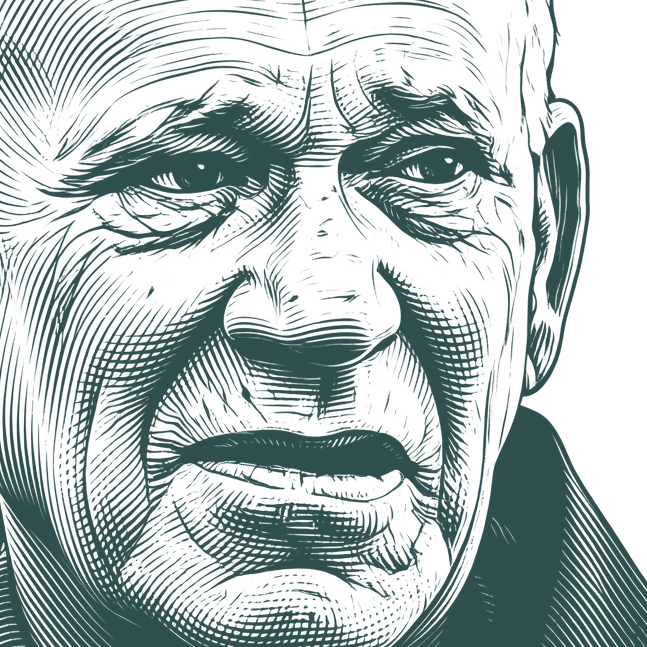
Eric Hoffer (25 July 1902 – 21 May 1983) was an American writer on social and political philosophy. His first book, The True Believer: Thoughts On The Nature Of Mass Movements (1951) is widely recognized as a classic on mass-movements and the psychological roots of fanaticism. Despite rising to fame with the success and popularity of his writings, he continued to work as a longshoreman until retiring at age 65.
Bio from: Wikiquote (CC BY-SA 4.0) · Portrait adapted from: Wikimedia Commons, White House of the President of the United States; uploaded to YouTube by TheLBJLibrary (Public domain / CC0)
Works in ChatGPT, Claude, or Any AI
Add semantic quote search to your AI assistant via MCP. One command setup.
Our doubts about ourselves cannot be banished except by working at that which is the one and only thing we know we ought to do. Other people's assertions cannot silence the howling dirge within us. It is our talents rusting unused within us that secrete the poison of self-doubt into our bloodstream.
Glory is largely a theatrical concept. There is no striving for glory without a vivid awareness of an audience... The desire to escape or camouflage their unsatisfactory selves develops in the frustrated a facility for pretending — for making a show — and also a readiness to identify themselves wholly with an imposing spectacle.
The impulse to think, to philosophize and spin beauty and brilliance out of mind and soul, is somehow the offspring of resistance — of an effort to overcome an apparently insurmountable obstacle. Hence cultural creativeness is more likely to flourish in an atmosphere of restriction, of an imposed pattern of thought and behavior, than in one of total freedom.
The noble carpenter from Galilee could make no headway when he challenged the pretension of the solemn scholars, hair-splitting lawyers, and arrogant pedants, and raised his voice in defense of the poor in spirit. He was ostracized and anathematized, and his teachings found a following chiefly among non-Jews. Yet the teachings of Jesus fared no better than the teachings of the prophets when they came wholly into the keeping of dominant intellectuals. They were made into a vehicle for the maintenance and aggrandizement of a vast hierarchy of clerks, while the poor in spirit, instead of inheriting the earth, were left to sink into serfdom and superstitious darkness. In the sixteenth century, we see the same pattern again. When Luther first defied the Pope and his councils he spoke feelingly of “the poor, simple, common folk.” Later, when allied with the German princelings, he lashed out against the rebellious masses with unmatched ferocity: “Let there be no half-measures! Cut their throats! Transfix them! Leave no stone unturned! To kill a rebel is to destroy a mad dog.” He assured his aristocratic patrons that “a prince can enter heaven by the shedding of blood more certainly than others by means of prayer.
Disraeli felt that "nothing could compensate his obscure youth, not even a glorious old age." Practically all writers and artists are aware of their destiny and see themselves as actors in a fateful drama. With me, nothing is momentous: obscure youth, glorious old age, fateful coincidences — nothing really matters. I have written a number of good sentences. I have kept free of delusions. I know I am going to die soon.