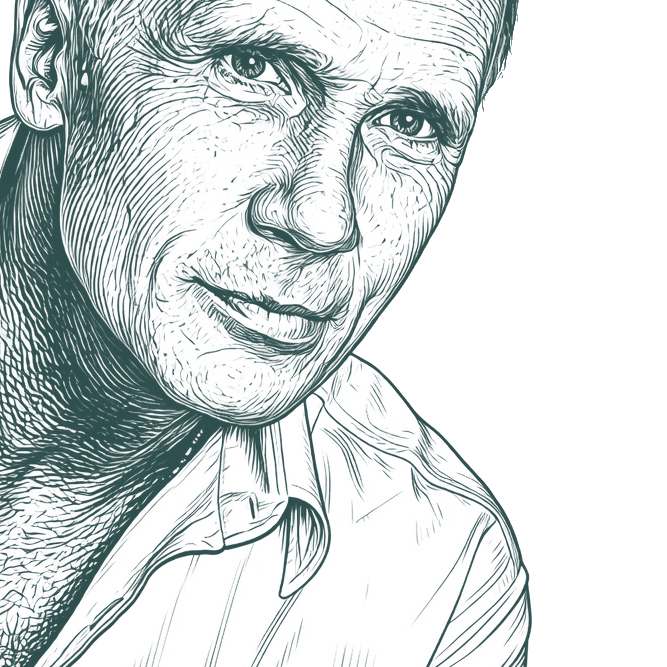
American novelist and screenwriter
Michael Cunningham (born November 6, 1952) is an American novelist and short story writer. He is best known for his 1998 novel The Hours, which won the Pulitzer Prize for Fiction and the PEN/Faulkner Award in 1999. Cunningham is a senior lecturer of creative writing at Yale University.
From: Wikiquote (CC BY-SA 4.0)
Which is probably one of the reasons those of us who love contemporary fiction love it as we do. We’re alone with it. It arrives without references, without credentials we can trust. Givers of prizes (not to mention critics) do the best they can, but they may — they probably will — be scoffed at by their children’s children. We, the living readers, whether or not we’re members of juries, decide, all on our own, if we suspect ourselves to be in the presence of greatness. We’re compelled to let future generations make the more final decisions, which will, in all likelihood, seem to them so clear as to produce a sense of bafflement over what was valued by their ancestors; what was garlanded and paraded, what carried to the temple on the shoulders of the wise.
Susan was a tough-minded romantic. She wanted to fall in love with a book. She always had reasons for her devotions, as an astute reader would, but she was, to her credit, probably the most emotional one among us. Susan could fall in love with a book in more or less the way one falls in love with a person. Yes, you can provide, if asked, a list of your loved one’s lovable qualities: he’s kind and funny and smart and generous and he knows the names of trees.
But he’s also more than amalgamation of qualities. You love him, the entirety of him, which can’t be wholly explained by even the most exhaustive explication of his virtues. And you love him no less for his failings. O.K., he’s bad with money, he can be moody sometimes, and he snores. His marvels so outshine the little complaints as to render them ridiculous.
He wanted to tell her that he was inspired and vigilant and recklessly alone, that his body contained his unsteady heart and something else, something he felt but could not describe: porous and spiky, shifting with flecks of thought, with urge and memory; salted with brightness, flickerings of white and green and pale gold; something that loved stars because it was made of the same substance.
Clarissa will be bereaved, deeply lonely, but she will not die. She will be too much in love with life, with London. Virginia imagines someone else, yes, someone strong of body but frail-minded; someone with a touch of genius, of poetry, ground under by the wheels of the world, by war and government, by doctors; a someone who is, technically speaking insane, because that person sees meaning everywhere, knows that trees are sentient beings and sparrows sing in Greek. Yes, someone like that. Clarissa, sane Clarissa -exultant, ordinary Clarissa - will go on, loving London, loving her life of ordinary pleasures, and someone else, a deranged poet, a visonary, will be the one to die.
Advanced Search Filters
Filter search results by source, date, and more with our premium search tools.
He insists on a version of you that is funnier, stranger, more eccentric and profound than you suspect yourself to be — capable of doing more good and more harm in the world than you've ever imagined — it is all but impossible not to believe, at least in his presence and a while after you've left him, that he alone sees through your essence, weighs your true qualities . . . and appreciates you more fully than anyone else ever has.
Gus the driver is everywhere and yet he appears nowhere, not in portraits or photographs, not even in the stories of men like Barthelme and Carver, who were all about guys with jobs and prospects like Gus's but who insisted on more sorrow, more angst, than Gus remotely manifests. If Gus weeps sometimes for no reason, if he stands despairing in the aisle of a Wal-Mart, it is not apparent in his daily demeanor...
Try QuoteGPT
Chat naturally about what you need. Each answer links back to real quotes with citations.
The song is an unvarnished love shout, an implorement tinged with...anger? Something like anger, but the anger of a philosoher, the anger of a pot. An anger directed at the transience of the world, at its heartbreaking beauty that collides constantly with our awareness of the fact that everything gets taken away, that we're being shown marvels but reminded always that they don't belong to us. They're sultans' treasures; we're lucky, we're expected to feel lucky to have been invited to see them at all.