American novelist and screenwriter
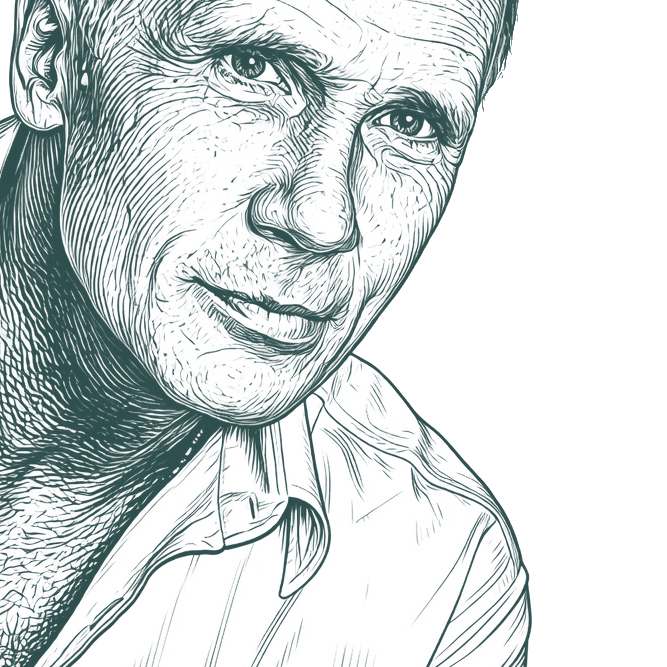
Michael Cunningham (born November 6, 1952) is an American novelist and short story writer. He is best known for his 1998 novel The Hours, which won the Pulitzer Prize for Fiction and the PEN/Faulkner Award in 1999. Cunningham is a senior lecturer of creative writing at Yale University.
Bio from: Wikiquote (CC BY-SA 4.0) · Portrait adapted from: Wikimedia Commons, David Shankbone (CC BY)
It is only after knowing him for some time that you begin to realize you are, to him, an essentially fictional character, one he has invested with nearly limitless capacities for tragedy and comedy not because that is your true nature but because he, Richard, needs to live in a world peopled by extreme and commanding figures.
It had seemed like the beginning of happiness, and Clarissa is still sometimes shocked, more than thirty years later, to realize that it was happiness; that the entire experience lay in a kiss and a walk, the anticipation of dinner and a book. The dinner is by now forgotten; Lessing has been long overshadowed by other writers; and even the sex, once she and Richard reached that point, was ardent but awkward, unsatisfying, ore kindly than passionate. What lives undimmed in Clarissa's ind more than three decades later is a kiss at dusk on a patch of dead grass, and a walk around a pond as mosquitoes droned in the darkening air. There is still that singular perfection, and it's perfect in part because it seemed, at the tie, so clearly to promise more. Now she knows: That was the moment, right then. There has been no other.
Advanced Search Filters
Filter search results by source, date, and more with our premium search tools.
The kiss was innocent — innocent enough — but it was also full of something not unlike what Virginia wants from London, from life; it was full of a love complex and ravenous, ancient, neither this nor that. It will serve as this afternoon's manifestation of the central mystery itself, the elusive brightness that shines from the edges of certain dreams; the brightness which, when we awaken, is already fading from our minds, and which we rise in the hope of finding, perhaps today, this new day in which anything might happen, anything at all.
He says, 'I don't know if I can face this. You know. The party and the ceremony, and then the hour after that, and the hour after that.'
'You don't have to go to the party. You don't have to go to the ceremony. You don't have to do anything at all.'
'But there are still the hours, aren't there? One and then another, and then you get through that one and then, my god, there's another. I'm so sick.
Enhance Your Quote Experience
Enjoy ad-free browsing, unlimited collections, and advanced search features with Premium.
Barret thinks- he thinks, briefly- of turning around and leaving the park; of being, this time, the vanisher, the man who leaves you wondering, who offers no explanation, not even the sour satisfaction of a real fight; who simply drifts away, because (it seems) there's affection and there's sex but there's no urgency, no little hooks clasping little eyes; no binding, no dogged devotions, no prayers for mercy, not when mercy can be so easily self-administered. What would it be like, Barrett wonders, to be the other, the man who's had the modest portion he thinks of as enough, who slips away before the mess sets in, before he's available to accusation and recrimination, before the authorities start demanding of him When, and Why, and With Whom