It was part of Rousseau's vanity that he believed himself incapable of base emotions. 'I feel too superior to hate.' 'I love myself too much to hate anybody.' 'Never have I known the hateful passions, never did jealousy, wickedness, vengeance enter my heart … anger occasionally but I am never crafty and never bear a grudge.' In fact he frequently bore grudges and was crafty in pursuing them.
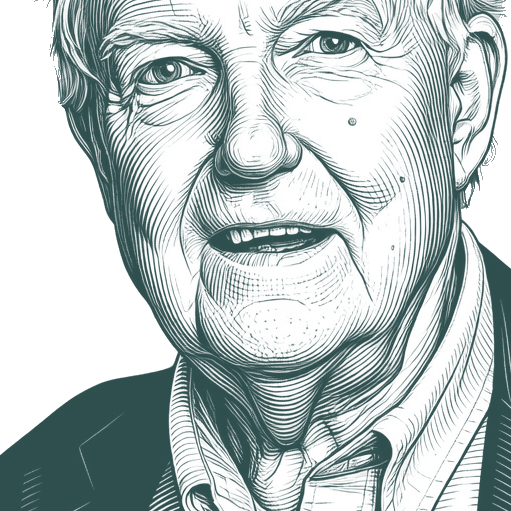
journalist, grand historian and speechwriter from England (1928–2023)
Paul Bede Johnson (2 November 1928 – 12 January 2023) was an English journalist, historian, speechwriter and author.
Bio from: Wikiquote (CC BY-SA 4.0) · Portrait adapted from: Wikimedia Commons, Alan Davidson (Public domain / CC0)
Birth Name:
Paul Bede Johnson
Alternative Names:
Paul Jonson
From Wikidata (CC0)
Showing quotes in randomized order to avoid selection bias. Click Popular for most popular quotes.
Again, the point was echoed powerfully and paradoxically by the heretic Jew, St Paul, in the dramatic opening to his First Epistle to the Corinthians, when he quotes the Lord, ‘I will destroy the wisdom of the wise, and will bring to nothing the understanding of the prudent’; and he adds, ‘Because the foolishness of God is wiser than men; and the weakness of God is stronger than men…[therefore] God hath chosen the foolish things of the world to confound the wise; and God hath chosen the weak things of the world to confound the things which are mighty.
Try QuoteGPT
Chat naturally about what you need. Each answer links back to real quotes with citations.
This kind of racial abuse is, thank God, rare in British journalism nowadays. The present case is serious, however, because Dahl is a well-known and successful author who, among other things, writes books for children and whose work is frequently used on TV. I ant not suggesting he be hauled before the Race Relations Board, a body which, I suspect, provokes rather than reduces racial antagonism, or indeed the Press Council, a tribunal which is falling in- to contempt. The most effective action the civilised community can take is for reputable writers to refuse to be associated with a journal which publishes such filth.
The study of history is a powerful antidote to contemporary arrogance. It is humbling to discover how many of our glib assumptions, which seem to us novel and plausible, have been tested before, not once but many times and in innumerable guises; and discovered to be, at great human cost, wholly false.
Limited Time Offer
Premium members can get their quote collection automatically imported into their Quotewise collections.
Virtue is the product of good government. ‘Vices belong less to man, than to man badly governed.’ The political process, and the new kind of state it brings into being, are the universal remedies for the ills of mankind.49 Politics will do all. Rousseau thus prepared the blueprint for the principal delusions and follies of the twentieth century.
The article by Roald Dahl in the August Issue of Literary Review is, in my view, the most disgraceful item to appear in a respectable British publication for a very, long time. Indeed 1 cannot recall anything like it ... As a rule, in a civilised country like Britain, those who hate the Israelis, or the Jews in general, are careful to mask their views behind a screen of anti-Zionism, thus in theory giving their collective condemnation a political rather than a racial rationale. Dahl is a different case. He is too reckless, or too angry, or too confident in getting away with it, to take such precautions.
Unlimited Quote Collections
Organize your favorite quotes without limits. Create themed collections for every occasion with Premium.
In a real revolution, the best characters do not come to the front. A violent revolution falls into the hands of narrow-minded fanatics and of tyrannical hypocrites at first. Afterwards come the turn of all the pretentious intellectual failures of the time. Such are the chiefs and the leaders. You will notice that I have left out the mere rogues. The scrupulous and the just, the noble, humane and devoted natures, the unselfish and the intelligent may begin a movement, but it passes away from them. They are not the leaders of a revolution. They are its victims: the victims of disgust, disenchantment–often of remorse. Hopes grotesquely betrayed, ideals caricatured–that is the definition of revolutionary success.