American business consultant (1909–2005)
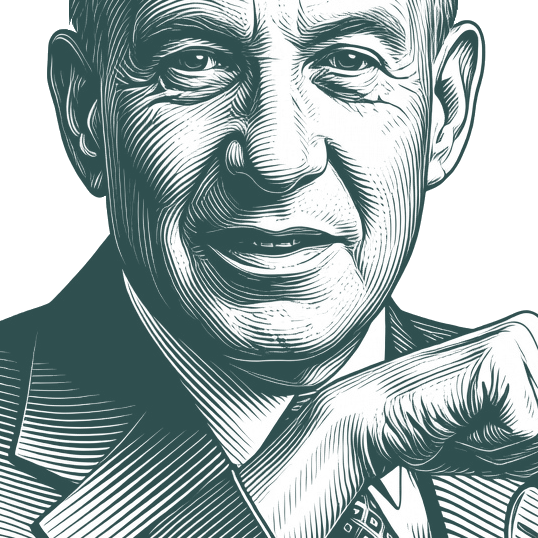
Peter Ferdinand Drucker (November 19 1909 – November 11 2005) was an Austrian-born American writer, management consultant and university professor. In 1943 he became a naturalized citizen of the United States. He taught at New York University and Claremont Graduate University respectively.
Bio from: Wikiquote (CC BY-SA 4.0) · Portrait adapted from: Wikimedia Commons, Jeff McNeill (CC BY-SA)
From Wikidata (CC0)
Good follow-up is just as important as the meeting itself. The great master of follow-up was Alfred Sloan, the most effective business executive I have ever known. Sloan, who headed General Motors from the 1920s until the 1950s, spent most of his six working days a week in meetings — three days a week in formal committee meetings with a set membership, the other three days in ad hoc meetings with individual GM executives or with a small group of executives. At the beginning of a formal meeting, Sloan announced the meeting’s purpose. He then listened. He never took notes and he rarely spoke except to clarify a confusing point. At the end he summed up, thanked the participants, and left. Then he immediately wrote a short memo addressed to one attendee of the meeting. In that note, he summarized the discussion and its conclusions and spelled out any work assignment decided upon in the meeting (including a decision to hold another meeting on the subject or to study an issue). He specified the deadline and the executive who was to be accountable for the assignment. He sent a copy of the memo to everyone who’d been present at the meeting. It was through these memos — each a small masterpiece — that Sloan made himself into an outstandingly effective executive.
3. An innovation, to be effective, has to be simple and it has to be focused. It should do only one thing, otherwise, it confuses. If it is not simple, it won’t work. Everything new runs into trouble; if complicated, it cannot be repaired or fixed. All effective innovations are breathtakingly simple. Indeed, the greatest praise an innovation can receive is for people to say: ‘This is obvious. Why didn’t I think of it?’ Even the innovation that creates new uses and new markets should be directed toward a specific, clear, designed application. It should be focused on a specific need that it satisfies, on a specific end result that it produces.
Advanced Search Filters
Filter search results by source, date, and more with our premium search tools.