French philosopher, writer, and social activist (1909–1943)
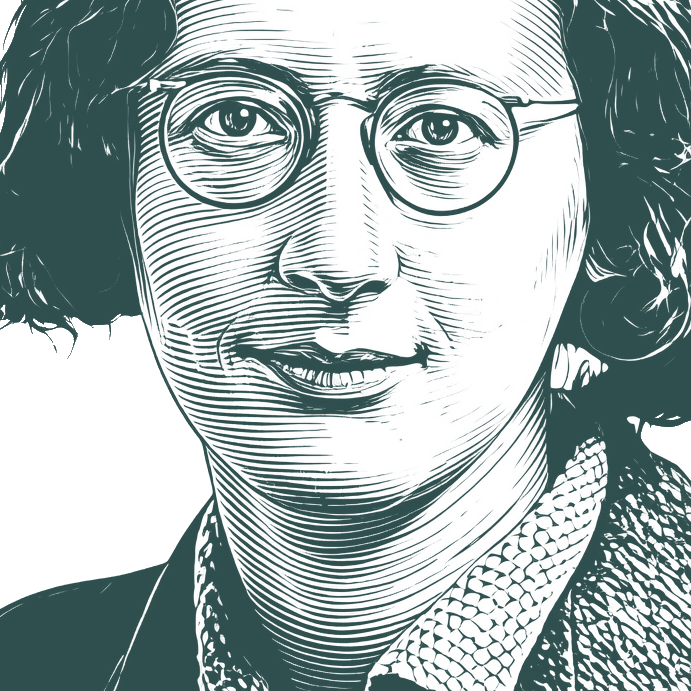
Simone Adolphine Weil (3 February 1909 – 24 August 1943) was a French social and religious philosopher, and Christian mystic. Politically active, during the Spanish Civil War she joined the Anarchist military unit known as the Durruti Column, and took part in the French Resistance during World War II. She was the sister of mathematician André Weil, with whom she shared an interest in ancient Greek and Indian thought.
Bio from: Wikiquote (CC BY-SA 4.0) · Portrait adapted from: Wikimedia Commons (Public domain / CC0)
From Wikidata (CC0)

Works in ChatGPT, Claude, or Any AI
Add semantic quote search to your AI assistant via MCP. One command setup.
The joy of meeting and the sorrow of separation … we should welcome these gifts … with our whole soul, and experience to the full, and with the same gratitude, all the sweetness or bitterness as the case may be. Meeting and separation are two forms of friendship that contain the same good, in the one case through pleasure and in the other through sorrow… Soon there will be distance between us. Let us love this distance which is wholly woven of friendship, for those who do not love each other are not separated.
If you say to someone who has ears to hear: "What you are doing to me is not just," you may touch and awaken at its source the spirit of attention and love. But it is not the same with words like, "I have the right..." or "you have no right to..." They evoke a latent war and awaken the spirit of contention.
The national interest cannot be defined as a common interest of the industrial, commercial, and financial companies of a country, because there is no such common interest; nor can it be defined as the life, liberty, and well-being of the citizens, because they are continually being adjured to sacrifice their well-being, their liberty, and their lives to the national interest. In the end a study of modern history leads to the conclusion that the national interest of every State consists in its capacity to make war.
Celui qui ignore à quel point la fortune variable et la nécessité tiennent toute âme humaine sous leur dépendance ne peut pas regarder comme des semblables ni aimer comme soi-même ceux que le hasard a séparés de lui par un abîme. La diversité des contraintes qui pèsent sur les hommes fait naître l'illusion qu'il y a parmi eux des espèces distinctes qui ne peuvent communiquer.
Unlimited Quote Collections
Organize your favorite quotes without limits. Create themed collections for every occasion with Premium.