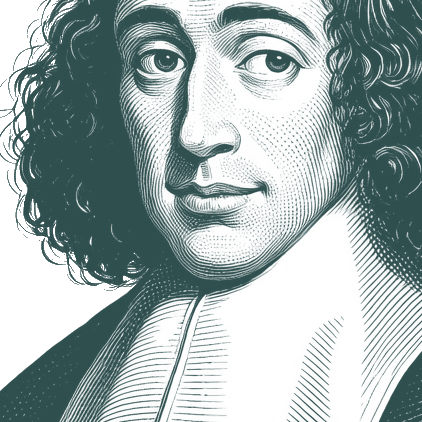
Neokantianism represents in the last analysis nothing but a certain academic line of thought, which has supplied us with a better knowledge of Kant a… - Benedictus de Spinoza
""
Neokantianism represents in the last analysis nothing but a certain academic line of thought, which has supplied us with a better knowledge of Kant and a useful literature of educated people. Agnosticism, on the other hand, on account of its diffusion among the people, is an actual symptom of the present condition of certain social classes. The socialists would have good grounds for believing that this symptom is one of the evidences of the decadence of the bourgeoisie. It certainly stands in marked contrast to the heroic devotion to truth shown by the thought of the precursors of modern history, such as Bruno and Spinoza, or to that conventional assertiveness, which was typical of the thinkers of the 18th century, until the classic German philosophy gradually came upon the scene.
English
Collect this quote
About
Benedictus de Spinoza
Benedictus de Spinoza (24 November 1632 – 21 February 1677) was a social and metaphysical philosopher known for the elaborate development of his monist philosophy, which has become known as Spinozism. Controversy regarding his ideas led to his excommunication from the Jewish community of his native Amsterdam. He was named Baruch ("blessed" in Hebrew) Spinoza by his synagogue elders and known as Bento de Spinoza or Bento d'Espiñoza, but afterwards used the name Benedictus ("blessed" in Latin) de Spinoza.
Native Name:
בָּרוּךְ שְׂפִּינוֹזָה
•
Benedito de Espinosa
Alternative Names:
Benedict de Spinoza
•
Baruch de Espinosa
•
Barukh Shpinozah
•
Benoît de Spinoza
•
Sbīnūzā
•
Ispīnūzā
•
Barukh Spinoza
•
Bento de Espinosa
•
Baruch d' Espinoza
•
Shpinozah
•
Baruch de Spinoza
•
Spinoza
•
Benoit de Spinoza
•
Benedictus De Spinoza
•
Benedictus Spinoza
•
Baruch Spinoza
•
Baruch Benedictus de Spinoza
One explanation for Spinoza's status as unknown celebrity is the scandal he caused in his own time. As we shall see (in Chapter Six), his words were deemed heretical and banned for decades and with rare exceptions were quoted only as part of the assault on his work. The attacks paralyzed most attempts by Spinoza admirers to discuss his ideas publicly. The natural continuity of intellectual acknowledgment that follows a thinker's work was thus interrupted, even as some of his ideas were used uncredited. This state of affairs, however, hardly explains why Spinoza continued to gain fame but remained unknown once the likes of Goethe and Wordsworth began to champion him. Perhaps a better explanation is that Spinoza is not easy to know.
The mystifying side of Hegelian dialectic I criticised nearly thirty years ago, at a time when it was still the fashion. But just as I was working at the first volume of “Das Kapital,” it was the good pleasure of the peevish, arrogant, mediocre ‘Epigonoi who now talk large in cultured Germany, to treat Hegel in same way as the brave Moses Mendelssohn in Lessing's time treated Spinoza, i.e., as a “dead dog.” I therefore openly avowed myself the pupil of that mighty thinker, and even here and there, in the chapter on the theory of value, coquetted with the modes of expression peculiar to him.
Unlimited Quote Collections
Organize your favorite quotes without limits. Create themed collections for every occasion with Premium.