British American author and lecturer (1915–1973)
Alan Wilson Watts (6 January 1915 – 16 November 1973) was an English philosopher, writer, speaker, and expert in comparative religion.
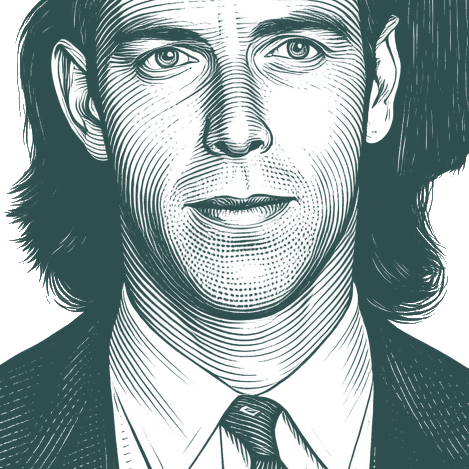
Bio from: Wikiquote (CC BY-SA 4.0) · Portrait adapted from: Wikimedia Commons, The University of Vermont Alumni Magazine vol. 39 no. 01, p. 22. (Public domain / CC0)
From Wikidata (CC0)

The highest good is like water, for the good of water is that it nourishes everything without striving. It occupies the place which all men think bad [i.e., the lowest level].17 [102d] It is thus that Tao in the world is like a river going down the valley to the ocean.18 [102e] The most gentle thing in the world overrides the most hard.19 [102g] How do coves and oceans become kings of a hundred rivers? Because they are good at keeping low — That is how they are kings of the hundred rivers.20 [102f] Nothing in the world is weaker than water, But it has no better in overcoming the hard.21 [101a]
Here, then, is the genesis of two of the most important historical premises of Western science. The first is that there is a law of nature, an order of things and events awaiting our discovery, and that this order can be formulated in thought, that is, in words or in some type of notation. The second is that the law of nature is universal, a premise deriving from monotheism, from the idea of one God ruling the whole world.
Timothy Leary was not so wide of the mark when he said that we must go out of our minds (abstract values) to come to our senses (concrete values). For coming to our senses must, above all, be the experience of our own existence as living organisms rather than “personalities,” like characters in a play or a novel acting out some artificial plot in which the persons are simply masks for a conflict of abstract ideas or principles. Man as an organism is to the world outside like a whirlpool is to a river: man and world are a single natural process, but we are behaving as if we were invaders and plunderers in a foreign territory. For when the individual is defined and felt as the separate personality or ego, he remains unaware that his actual body is a dancing pattern of energy that simply does not happen by itself. It happens only in concert with myriads of other patterns — called animals, plants, insects, bacteria, minerals, liquids, and gases. The definition of a person and the normal feeling of “I” do not effectively include these relationships. You say, “I came into this world.” You didn’t; you came out of it, as a branch from a tree.
Life exists only at this very moment, and in this moment it is infinite and eternal. For the present moment is infinitely small; before we can measure it, it has gone, and yet it persists for ever. This movement and change has been called Tao by the Chinese, yet in fact there is no movement, for the moment is the only reality and there is nothing beside it in relation to which it can be said to move. Thus it can be called at once the eternally moving and eternally resting.
This mysterious something has been called God, the Absolute, Nature, Substance, Energy, Space, Ether, Mind, Being, the Void, the Infinite—names and ideas which shift in popularity and respectabilitywith the winds of intellectual fashion, of considering the universe intelligent or stupid, superhuman or subhuman, specific or vague. All of them might be dismissed as nonsense-noises if the notion of an underlying Ground of Being were no more than a product of intellectual speculation. But these names are often used to designate the content of a vivid and almost sensorily concrete experience—the "unitive" experience of the mystic, which, with secondary variations, is found in almost all cultures at all times. This experience is the transformed sense of self which I was discussing in the previous chapter, though in "naturalistic" terms, purified of all hocus-pocus about mind, soul, spirit, and other intellectually gaseous words.
We do not feel that ordinarily, do we? What we feel, instead, is an identification of ourselves with our ideas of ourselves — I would rather say, with our image of ourselves. That is the person, or the ego. You play a role; you identify with that role. I play a role called Alan Watts. And I know very well that it is a big act. I can play some other roles besides Alan Watts if necessary, but I find this one is best for making a living. But I assure you that is a mask and I do not take it seriously. The idea of my being a kind of guru, or savior of the world just breaks me up, because I know me. Besides, it is very difficult to be holy, in the ordinary sense.