French mathematician, physicist, inventor, writer, and Christian philosopher (1623-1662)
Blaise Pascal (19 June 1623 – 19 August 1662) was a French mathematician, logician, physicist and theologian.
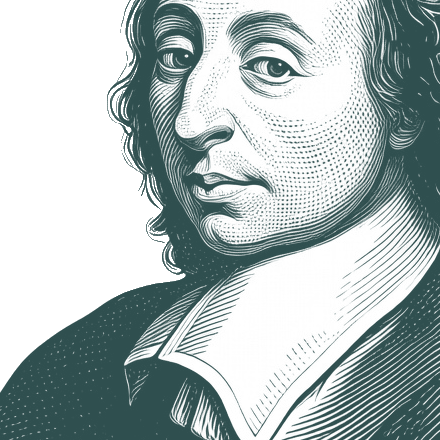
Bio from: Wikiquote (CC BY-SA 4.0) · Portrait adapted from: Wikimedia Commons, unknown; a copy of the painting of François II Quesnel, which was made for Gérard Edelinck en 1691[réf. nécessaire]. (Public domain / CC0)
From Wikidata (CC0)

It is dangerous to explain too clearly to man how like he is to the animals without pointing out his greatness. It is also dangerous to make too much of his greatness without his vileness. It is still more dangerous to leave him in ignorance of both, but it is most valuable to represent both to him.
Man must not be allowed to believe that he is equal either to animals or to angels, nor to be unaware of either, but he must know both.
L'homme n'est qu'un roseau, le plus faible de la nature; mais c'est un roseau pensant. Il ne faut pas que l'univers entier s'arme pour l'éraser: un vapeur, un goutte d'eau suffit pout le tuer. Mais, quand l'univers l'écraserait, l'homme serait encore plus noble que ce qui le tue, pare qu'il sait qu'il meurt, et l'avantage que l'univers a sur lui, l'univers n'en sait rien.
All who say the same things do not possess them in the same manner; and hence the incomparable author of the Art of Conversation pauses with so much care to make it understood that we must not judge of the capacity of a man by the excellence of a happy remark that we heard him make. ...let us penetrate, says he, the mind from which it proceeds... it will oftenest be seen that he will be made to disavow it on the spot, and will be drawn very far from this better thought in which he does not believe, to plunge himself into another, quite base and ridiculous.
Niciodată nu rămânem în prezent. Anticipăm viitorul, ca şi cum ni s-ar părea că soseşte prea greu şi încercăm să-l grăbim; evocăm trecutul, ca şi cum am încerca să oprim repeziciunea cu care se îndepărtează de noi. Suntem atât de nesăbuiți, încât cutreierăm doar timpuri care nu sunt ale noastre și nu ne gândim nicio clipă la singurul timp care ne aparține; şi atât de vanitoși, încât visăm la timpuri care nu există în momentul de față, lăsând să ne scape singurul care există. Adevărul este că, adesea, prezentul e dureros. Îl ascundem privirii noastre, fiindcă ne provoacă suferinţă, iar dacă e plăcut, regretăm că se indepărtează. Încercăm să-l susţinem cu ajutorul viitorului și ne gândim cum să organizăm lucruri pe care nu le putem controla, pentru un moment la care nu putem fi siguri că vom ajunge. Dacă fiecare şi-ar analiza gândurile, le-ar găsi preocupate în întregime de trecut ori de viitor. Mai niciodată nu ne gândim la prezent, iar dacă o facem, e doar pentru a căpăta o perspectivă asupra viitorului. Prezentul nu e niciodată ţelul nostru. Trecutul şi prezentul ne sunt doar mijloacele de care ne folosim, singurul nostru țel fiind viitorul. Astfel, nu ajungem niciodată să trăim cu adevărat, ci doar sperăm să o facem. Și, din moment ce plănuim neîncetat cum să fim fericiți, inevitabil, nu vom fi niciodată.
Jesus Christ typified by Joseph, the beloved of his father, sent by his father to see his brethren, etc., innocent, sold by his brethren for twenty pieces of silver, and thereby becoming their lord, their saviour, the saviour of strangers, and the saviour of the world; which had not been but for their plot to destroy him, their sale and their rejection of him.
In prison Joseph innocent between two criminals; Jesus Christ on the cross between two thieves. Joseph foretells freedom to the one, and death to the other, from the same omens. Jesus Christ saves the elect, and condemns the outcast for the same sins. Joseph foretells only; Jesus Christ acts. Joseph asks him who will be saved to remember him, when he comes into his glory; and he whom Jesus Christ saves asks that He will remember him, when He comes into His kingdom.