Mario'd fallen in love with the first Madam Psychosis programs because he felt like he was listening to someone sad read out loud from yellow letters she'd taken out of a shoebox on a rainy P.M, stuff about heartbreak and people you loved dying and U.S. woe, stuff that was real. It is increasingly hard to find valid art that is about stuff that is real in this way. The older Mario gets, the more confused he gets about the fact that everyone at E.T.A. over the age of about Kent Blott finds stuff that's really real uncomfortable and they get embarrassed. It's like there's some rule that real stuff can only get mentioned if everybody rolls their eyes or laughs in a way that isn't happy.
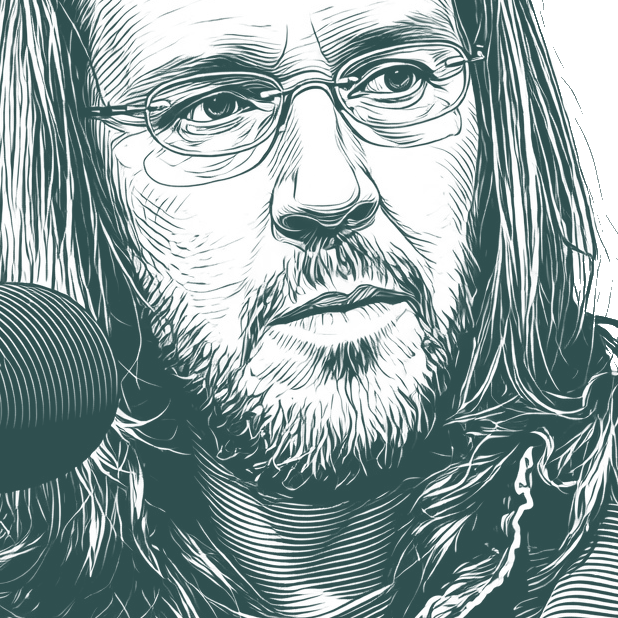
American fiction writer and essayist (1962–2008)
David Foster Wallace (21 February 1962 – 12 September 2008) was an American novelist, essayist, and short story writer. His works include The Broom of the System (novel), Infinite Jest (novel), The Girl With Curious Hair (short story collection), Brief Interviews with Hideous Men (short story collection), A Supposedly Fun Thing I'll Never Do Again (essay collection), and the posthumously-published The Pale King (novel) and Both Flesh and Not (essay collection).
Bio from: Wikiquote (CC BY-SA 4.0) · Portrait adapted from: Wikimedia Commons, Steve Rhodes (CC BY)
Alternative Names:
David Wallace
From Wikidata (CC0)

Showing quotes in randomized order to avoid selection bias. Click Popular for most popular quotes.
Because here's something else that's weird but true: in the day-to day trenches of adult life, there is actually no such thing as atheism. There is no such thing as not worshipping. Everybody worships. The only choice we get is what to worship. And the compelling reason for maybe choosing some sort of god or spiritual-type thing to worship — be it JC or Allah, be it YHWH or the Wiccan Mother Goddess, or the Four Noble Truths, or some inviolable set of ethical principles — is that pretty much anything else you worship will eat you alive. If you worship money and things, if they are where you tap real meaning in life, then you will never have enough, never feel you have enough. It's the truth. Worship your body and beauty and sexual allure and you will always feel ugly. And when time and age start showing, you will die a million deaths before they finally grieve you. On one level, we all know this stuff already. It's been codified as myths, proverbs, clichés, epigrams, parables; the skeleton of every great story. The whole trick is keeping the truth up front in daily consciousness.
"Irony and cynicism were just what the U.S. hypocrisy of the fifties and sixties called for. That’s what made the early postmodernists great artists. The great thing about irony is that it splits things apart, gets up above them so we can see the flaws and hypocrisies and duplicates. The virtuous always triumph? Ward Cleaver is the prototypical fifties father? "Sure." Sarcasm, parody, absurdism and irony are great ways to strip off stuff’s mask and show the unpleasant reality behind it. The problem is that once the rules of art are debunked, and once the unpleasant realities the irony diagnoses are revealed and diagnosed, "then" what do we do? Irony’s useful for debunking illusions, but most of the illusion-debunking in the U.S. has now been done and redone. Once everybody knows that equality of opportunity is bunk and Mike Brady’s bunk and Just Say No is bunk, now what do we do? All we seem to want to do is keep ridiculing the stuff. Postmodern irony and cynicism’s become an end in itself, a measure of hip sophistication and literary savvy. Few artists dare to try to talk about ways of working toward redeeming what’s wrong, because they’ll look sentimental and naive to all the weary ironists. Irony’s gone from liberating to enslaving. There’s some great essay somewhere that has a line about irony being the song of the prisoner who’s come to love his cage."
Unlimited Quote Collections
Organize your favorite quotes without limits. Create themed collections for every occasion with Premium.
"....there is an ending [to Infinite Jest] as far as I'm concerned. Certain kind of parallel lines are supposed to start converging in such a way that an "end" can be projected by the reader somewhere beyond the right frame. If no such convergence or projection occured to you, then the book's failed for you."