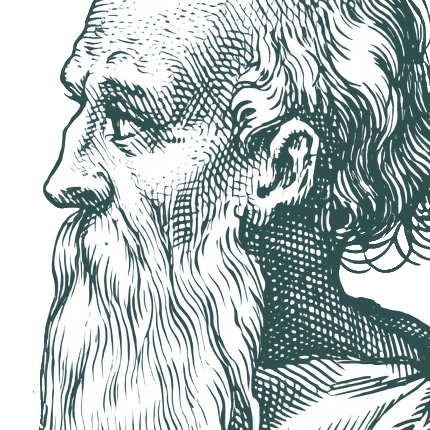
"But what says Socrates? — "One man finds pleasure in improving his land, another his horses. My pleasure lies in seeing that I myself grow better day by day.

Do not afflict others with anything that you yourself would not wish to suffer. if you would not like to be a slave, make sure no one is your slave. If you have slaves, you yourself are the greatest slave, for just as freedom is incompatible with slavery, so goodness is incompatible with hypocrisy.

Go Premium

Support Quotewise while enjoying an ad-free experience and premium features.

View Plans
Where does the good lie? ‘In the will.’ And evil? ‘Also in the will.’ And things neither good nor bad – ‘… lie in whatever is external to the will.

Everything has two handles, the one by which it may be carried, the other by which it cannot. If your brother acts unjustly, don't lay hold on the action by the handle of his injustice, for by that it cannot be carried; but by the opposite, that he is your brother, that he was brought up with you; and thus you will lay hold on it, as it is to be carried. (43).

We must make the best use that we can of the things which are in our power, and use the rest according to their nature.

From Epictetus's discourse on what is and is not in our power (Discourses I.1), recorded by his student Arrian.


And who can give to another what he has not himself?

Enchiridion 24, the handbook of Epictetus's teaching compiled by his student Arrian; answering the objection that a philosopher leaves his friends unassisted.


If a person gave your body to any stranger he met on his way, you would certainly be angry. And do you feel no shame in handing over your own mind to be confused and mystified by anyone who happens to verbally attack you? (28) [tr. Elizabeth Carter]

Who are those people by whom you wish to be admired? Are they not these about whom you are in the habit of saying that they are mad? What then? Do you wish to be admired by the mad?

Τάξον τινὰ ἤδη χαρακτῆρα σαυτῷ καὶ τύπον, ὃν φυλάξεις ἐπί τε σεαυτοῦ ὢν καὶ ἀνθρώποις ἐντυγχάνων.

Enchiridion 33, the handbook of Epictetus's teaching compiled by his student Arrian.


We should realize that an opinion is not easily formed unless a person says and hears the same things every day and practises them in real life.

He must know that he is sent a messenger from Zeus to men about good and bad things, to show them that they have wandered and are seeking the substance of good and evil where it is not, but where it is, they never think.

From Epictetus's discourse On the Cynic Calling (Discourses III.22), recorded by his student Arrian; answering a pupil who asked what sort of man a Cynic must be.