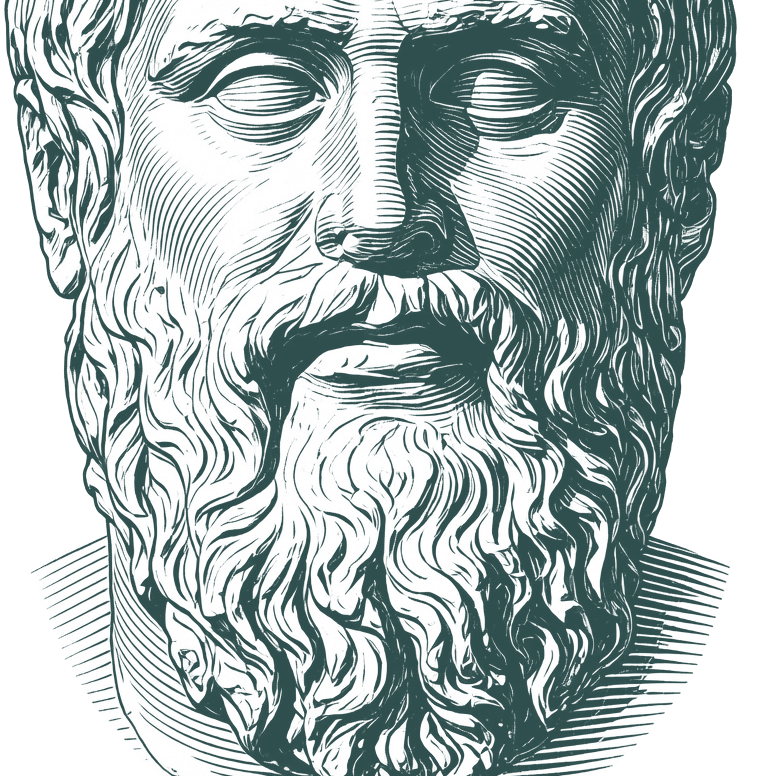
4th-century BCE Greek philosopher
Plato (Πλάτων Plátōn; c. 427 BC – c. 347 BC) was a Greek philosopher from Athens during the Classical period in Ancient Greece, founder of the Platonist school of thought and the Academy (Akademia), the first institution of higher learning in the Western world.
Bio from: Wikiquote (CC BY-SA 4.0) · Portrait adapted from: Wikimedia Commons, Marie-Lan Nguyen (CC BY)
From Wikidata (CC0)
They despised everything but virtue, caring little for their present state of life, and thinking lightly of the possession of gold and other property, which seemed only a burden to them; neither were they intoxicated by luxury; nor did wealth deprive them of their self-control; but they were sober, and saw clearly that all these goods are increased by virtue and friendship with one another, whereas by too great regard and respect for them, they are lost and friendship with them.
Ηow natural it is that those who have spent a long time in the study of philosophy appear ridiculous when they enter the courts of law as speakers… Those who have knocked about in courts and the like from their youth up seem to me, when compared with those who have been brought up in philosophy and similar pursuits, to be as slaves in breeding compared with freemen… The latter always have leisure, and they talk at their leisure in peace;… and they do not care at all whether their talk is long or short, if only they attain the truth. But the men of the other sort are always in a hurry and the other party in the suit does not permit them to talk about anything they please.
Unlimited Quote Collections
Organize your favorite quotes without limits. Create themed collections for every occasion with Premium.
Whereas, our argument shows that the power and capacity of learning exists in the soul already; and that just as the eye was unable to turn from darkness to light without the whole body, so too the instrument of knowledge can only by the movement of the whole soul be turned from the world of becoming into that of being, and learn by degrees to endure the sight of being, and of the brightest and best of being, or in other words, of the good.
There were many special laws affecting the several kings inscribed about the temples, but the most important was the following: They were not to take up arms against one another, and they were all to come to the rescue if any one in any of their cities attempted to overthrow the royal house; like their ancestors, they were to deliberate in common about war and other matters, giving the supremacy to the descendants of Atlas. And the king was not to have the power of life and death over any of his kinsmen unless he had the assent of the majority of the ten.