American environmentalist
Robin Wall Kimmerer (born September 13, 1953) is an enrolled member of the Citizen Potawatomi Nation who is the Distinguished Teaching Professor of Environmental and Forest Biology; and Director, Center for Native Peoples and the Environment, at the State University of New York College of Environmental Science and Forestry (SUNY-ESF). She is the author of numerous scientific articles, and the books Gathering Moss: A Natural and Cultural History of Mosses (2003), and Braiding Sweetgrass: Indigenous Wisdom, Scientific Knowledge and the Teachings of Plants (2013).
Bio from: Wikiquote (CC BY-SA 4.0) · Portrait adapted from: Wikimedia Commons, Indiana Humanities (CC BY-SA)
From Wikidata (CC0)
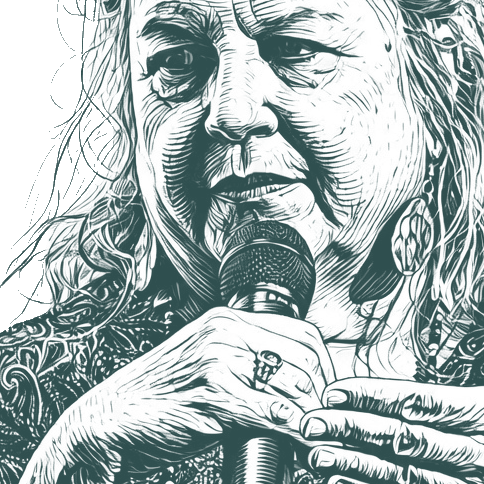
People can take too much and exceed the capacity of the plants to share again. That’s the voice of hard experience that resonates in the teachings of “never take more than half.” And yet, they also teach that we can take too little. If we allow traditions to die, relationships to fade, the land will suffer.
Puhpowee, she explained, translates as “the force which causes mushrooms to push up from the earth overnight.” As a biologist, I was stunned that such a word existed.
The makers of this word understood a world of being, full of unseen energies that animate everything. I’ve cherished it for many years, as a talisman, and longed for the people who gave a name to the life force of mushrooms. The language that holds Puhpowee is one that I wanted to speak. So when I learned that the word for rising, for emergence, belonged to the language of my ancestors, it became a signpost for me.
Advanced Search Filters
Filter search results by source, date, and more with our premium search tools.
The idea of reciprocity, of recognizing that we humans do have gifts that we can give in return for all that has been given to us, is I think a really generative and creative way to be a human in the world. And some of our oldest teachings are saying that what does it mean to be an educated person? It means that you know what your gift is and how to give it, on behalf of the land and of the people, just like every single species has its own gift.
Gardens are simultaneously a material and a spiritual undertaking. That’s hard for scientists, so fully brainwashed by Cartesian dualism, to grasp. “Well, how would you know it’s love and not just good soil?” she asks. “Where’s the evidence? What are the key elements for detecting loving behavior?” That’s easy. No one would doubt that I love my children, and even a quantitative social psychologist would find no fault with my list of loving behaviors: nurturing health and well-being protection from harm encouraging individual growth and development desire to be together generous sharing of resources working together for a common goal celebration of shared values interdependence sacrifice by one for the other creation of beauty If we observed these behaviors between humans, we would say, “She loves that person.” You might also observe these actions between a person and a bit of carefully tended ground and say, “She loves that garden.” Why then, seeing this list, would you not make the leap to say that the garden loves her back?
In indigenous ways of knowing, it is understood that each living being has a particular role to play. Every being is endowed with certain gifts, its own intelligence, its own spirit, its own story. Our stories tell us that the Creator gave these to us, as original instructions. The foundation of education is to discover that gift within us and learn to use it well.