Leaving aside the metaphysics, mythology, and sectarian dogma, what contemplatives throughout history have discovered is that there is an alternative to being continuously spellbound by the conversation we are having with ourselves; there is an alternative to simply identifying with the next thought that pops into consciousness. And glimpsing this alternative dispels the conventional illusion of the self.
American author, philosopher and neuroscientist (born 1967)
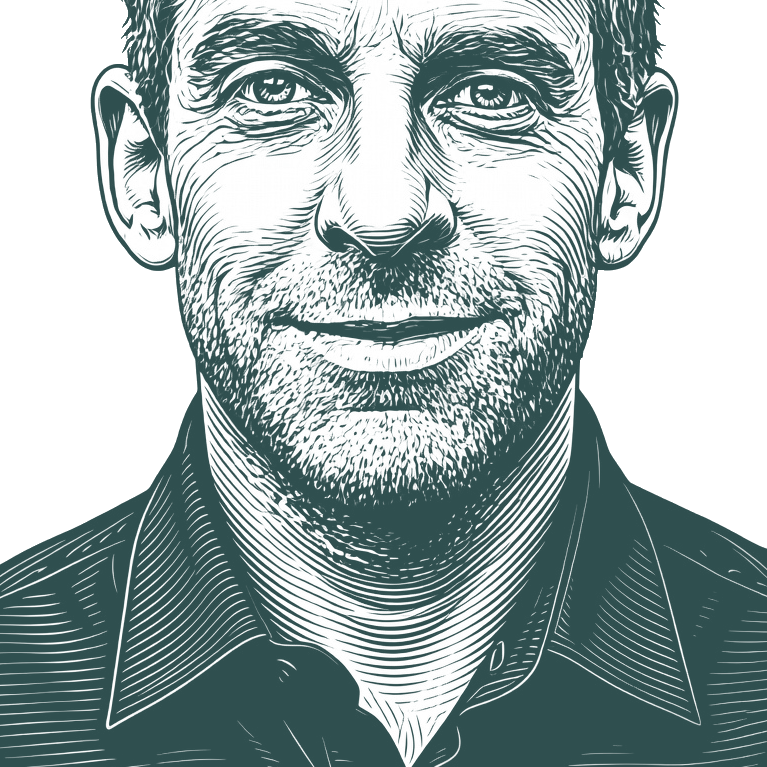
Samuel Benjamin Harris (born April 9, 1967) is an American author, philosopher, public intellectual, and neuroscientist, as well as the co-founder and CEO of Project Reason. He is the author of The End of Faith (2004), which won the PEN/Martha Albrand Award for First Nonfiction in 2005 and appeared on The New York Times best seller list for 33 weeks, Letter to a Christian Nation (2006), The Moral Landscape (2010), Lying (2011), Free Will (2012), and most recently Waking Up: A Guide to Spirituality Without Religion (2014).
Bio from: Wikiquote (CC BY-SA 4.0) · Portrait adapted from: Wikimedia Commons, Cmichel67 (Christopher Michel) (CC BY-SA)
Birth Name:
Samuel Benjamin Harris
Alternative Names:
Samuel Harris
From Wikidata (CC0)

Showing quotes in randomized order to avoid selection bias. Click Popular for most popular quotes.
I'll tell you what harms the vast majority of Muslims that love freedom and hate terror: Muslim theocracy does. Muslim intolerance does. Wahabism does. Salafism does. Islamism does. Jihadism does. Sharia law does. The mere conservatism of traditional Islam does. We're not talking about only jihadists hating homosexuals and thinking they should die, we're talking about conservative Muslims. The percentage of British Muslims polled who said that homosexuality was morally acceptable was zero. Do you realize what it takes to say something so controversial in a poll that not even 1% of those polled would agree with it? There's almost no question that extreme that you will ever see in a poll that gets a zero, but ask British Muslims whether homosexuality is morally acceptable, and that's what you get. And the result is more or less the same in dozens of other countries. It's zero in Cameroon, zero in Ethiopia. 1% in Nigeria, 1% in Tanzania, 1% in Mali, 2% in Kenya, 2% in Chad. 1% in Lebanon, 1% in Egypt, 1% in the Palestinian territories, 1% in Iraq, 2% in Jordan, 2% in Tunisia, 1% in Pakistan. But 10% in Bangladesh. Bangladesh: that bright spot in the Muslim world where they are regularly hunting down and butchering secular writers with machetes. The people who suffer under this belief system are Muslims themselves. The next generation of human beings born into a Muslim community who could otherwise have been liberal, tolerant, well-educated, cosmopolitan productive people are to one or another degree being taught to aspire to live in the Middle Ages, or to ruin this world on route to some fictional paradise after death. That's the thing we have to get our heads around. And yes, some of what I just said applies with varying modifications to other religions and other cults. But there is nothing like Islam at this moment for generating this kind of intolerance and chaos. And if only a right wing demagogue will speak honestly about it, then we will elect right wing demagogues in the West more and more in response to it. And that will be the price of political correctness: that's when this check will finally get cashed. That will be the consequence of this persistent failure we see among liberals to speak and think and act with real moral clarity and courage on this issue. The root of this problem is that liberals consistently fail to defend liberal values as universal human values. Their political correctness, their multiculturalism, their moral relativism has led them to rush to the defense of theocrats and to abandon the victims of theocracy and to vilify anyone who calls out this hypocrisy for what it is as a bigot. And to be clear, and this is what liberals can't seem to get, is that speaking honestly about the ideas that inspire Islamism and jihadism, beliefs about martyrdom, and apostasy and blasphemy and paradise and honour and women, is not an expression of hatred for Muslims. It is in fact the only way to support the embattled people in the Muslim community: The reformers and the liberals and the seculars and the free thinkers and the gays and the Shiia in Sunni-majority context and Sufis and Ahmadiyyas, and as Maajid Nawaz said, the minorities within the minority, who are living under the shadow, and sword rather often, under theocracy. [...] If you think that speaking honestly about the need for reform within Islam will alienate your allies in the Muslim community, then you don't know who your allies are.
Try QuoteGPT
Chat naturally about what you need. Each answer links back to real quotes with citations.
Is there a form of happiness beyond the mere repetition of pleasure and avoidance of pain? Is there a happiness that does not depend upon having one’s favourite foods available, or friends and loved ones within arm’s reach, or good books to read, or something to look forward to on the weekend? Is it possible to be happy before anything happens, before one’s desires are gratified, in spite of life’s difficulties, in the very midst of physical pain, old age, disease, and death?
Some people are content in the midst of deprivation and danger, while others are miserable despite having all the luck in the world. This is not to say that external circumstances do not matter. But it is your mind, rather than circumstances themselves, that determines the quality of your life. Your mind is the basis of everything you experience and of every contribution you make to the lives of others. Given this fact, it makes sense to train it.
There is, in fact, no worldview more reprehensible in its arrogance than that of a religious believer: the creator of the universe takes an interest in me, approves of me, loves me, and will reward me after death; my current beliefs, drawn from scripture, will remain the best statement of the truth until the end of the world; everyone who disagrees with me will spend eternity in hell….
The promise of spiritual life - indeed, the very thing that makes it 'spiritual' in the sense I invoke throughout this book - is that there are truths about the mind that we are better off knowing. What we need to become happier and to make the world a better place is not more pious illusions but a clearer understanding of the way things are.