American author, philosopher and neuroscientist (born 1967)
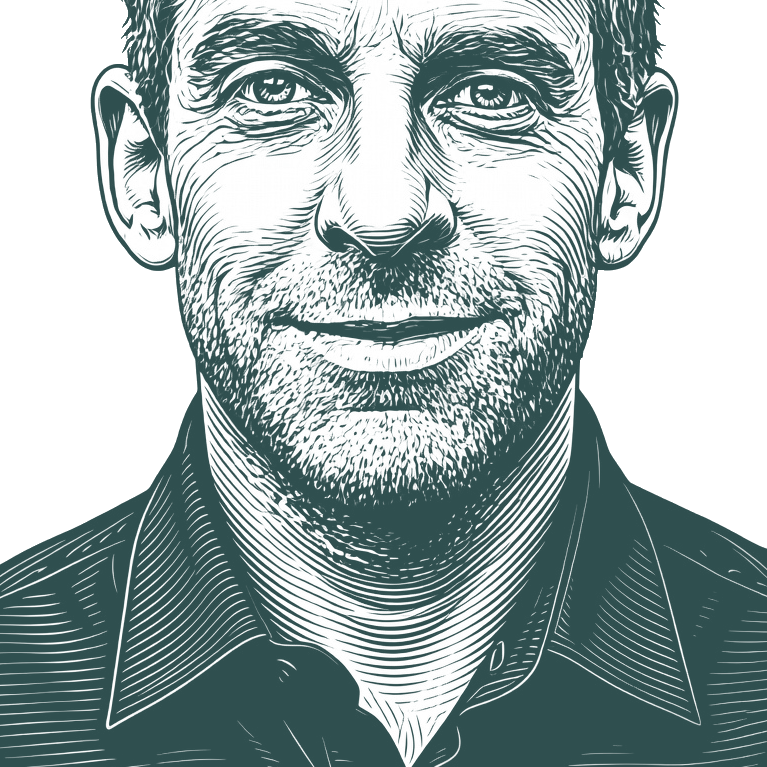
Samuel Benjamin Harris (born April 9, 1967) is an American author, philosopher, public intellectual, and neuroscientist, as well as the co-founder and CEO of Project Reason. He is the author of The End of Faith (2004), which won the PEN/Martha Albrand Award for First Nonfiction in 2005 and appeared on The New York Times best seller list for 33 weeks, Letter to a Christian Nation (2006), The Moral Landscape (2010), Lying (2011), Free Will (2012), and most recently Waking Up: A Guide to Spirituality Without Religion (2014).
Bio from: Wikiquote (CC BY-SA 4.0) · Portrait adapted from: Wikimedia Commons, Cmichel67 (Christopher Michel) (CC BY-SA)
From Wikidata (CC0)

In those circumstances where we deem it obviously necessary to lie, we have generally determined that the person to be deceived is both dangerous and unreachable by any recourse to the truth. In other words, we have judged the prospects of establishing a genuine relationship with him to be nonexistent.
You have not built your mind. And in moments in which you seem to build it — when you make an effort to change yourself, to acquire knowledge, or to perfect a skill — the only tools at your disposal are those that you have inherited from moments past.
Choices, efforts, intentions, and reasoning influence our behavior — but they are themselves part of a chain of causes that precede conscious awareness and over which we exert no ultimate control. My choices matter — and there are paths toward making wiser ones — but I cannot choose what I choose. And if it ever appears that I do — for instance, after going back and forth between two options — I do not choose to choose what I choose. There is a regress here that always ends in darkness. I must take a first step, or a last one, for reasons that are bound to remain inscrutable.
One must be able to pay attention closely enough to glimpse what consciousness is like between thoughts — that is, prior to the arising of the next one. Consciousness does not feel like a self. Once one realizes this, the status of thoughts themselves, as transient expressions of consciousness, can be understood.
Unlimited Quote Collections
Organize your favorite quotes without limits. Create themed collections for every occasion with Premium.
Critiquing Islam, critiquing any idea, is not bigotry. “Islamophobia” is a troubled and inherently unhelpful term. Yes, hatred of Muslims by neo-Nazi-style groups does exist, and it is a form of cultural intolerance, but that must never be conflated with the free-speech right to critique Islam. Islam is, after all, an idea; we cannot expect its merits or demerits to be accepted if we cannot openly debate it.
Leaving aside the metaphysics, mythology, and sectarian dogma, what contemplatives throughout history have discovered is that there is an alternative to being continuously spellbound by the conversation we are having with ourselves; there is an alternative to simply identifying with the next thought that pops into consciousness. And glimpsing this alternative dispels the conventional illusion of the self.
Of course, there can be clear indications that a teacher is not worth paying attention to. A history as a fabulist or a con artist should be considered fatal; thus, the spiritual opinions of Joseph Smith, Gurdjieff, and L. Ron Hubbard can be safely ignored. A fetish for numbers is also an ominous sign. Math is magical, but math approached like magic is just superstition — and numerology is where the intellect goes to die. Prophecy is also a very strong indication of chicanery or madness on the part of a teacher, and of stupidity among his students. One can extrapolate from scientific data or technological trends (climate models, Moore’s law), but most detailed predictions about the future lead to embarrassment right on schedule.
Despite our attachment to the notion of free will, most of us know that disorders of the brain can trump the best intentions of the mind. This shift in understanding represents progress toward a deeper, more consistent, and more compassionate view of our common humanity — and we should note that this is progress away from religious metaphysics. Few concepts have offered greater scope for human cruelty than the idea of an immortal soul that stands
independent of all material influences, ranging from genes to economic systems. Within a religious framework, a belief in free will supports the notion of sin — which seems to justify not only harsh punishment in this life but eternal
punishment in the next. And yet, ironically, one of the fears attending our progress in science is that a more complete understanding of ourselves will dehumanize us.