American author, philosopher and neuroscientist (born 1967)
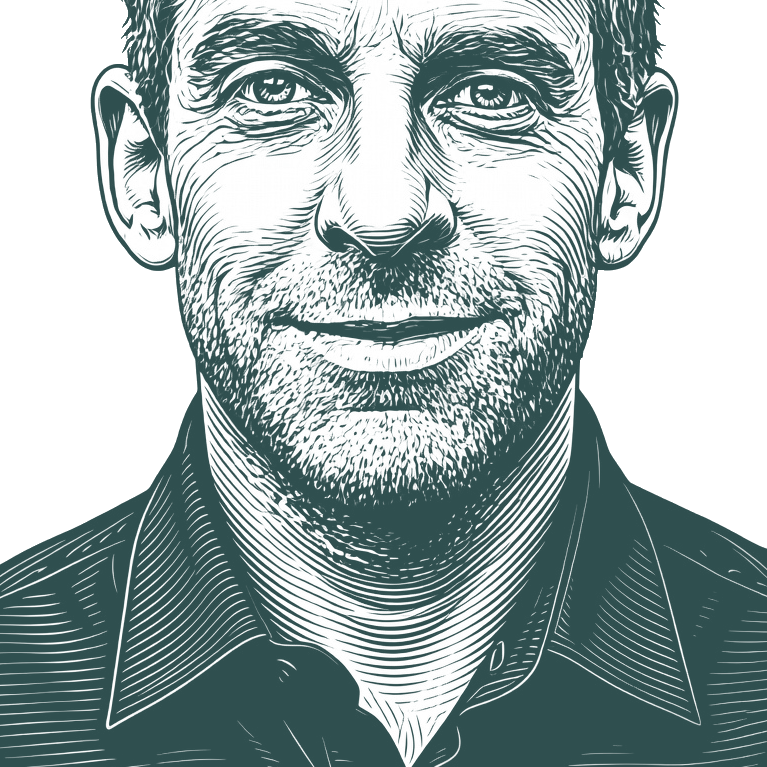
Samuel Benjamin Harris (born April 9, 1967) is an American author, philosopher, public intellectual, and neuroscientist, as well as the co-founder and CEO of Project Reason. He is the author of The End of Faith (2004), which won the PEN/Martha Albrand Award for First Nonfiction in 2005 and appeared on The New York Times best seller list for 33 weeks, Letter to a Christian Nation (2006), The Moral Landscape (2010), Lying (2011), Free Will (2012), and most recently Waking Up: A Guide to Spirituality Without Religion (2014).
Bio from: Wikiquote (CC BY-SA 4.0) · Portrait adapted from: Wikimedia Commons, Cmichel67 (Christopher Michel) (CC BY-SA)
From Wikidata (CC0)

Your life doesn't get any better than your mind is: You might have wonderful friends, perfect health, a great career, and everything else you want, and you can still be miserable. The converse is also true: There are people who basically have nothing—who live in circumstances that you and I would do more or less anything to avoid—who are happier than we tend to be because of the character of their minds. Unfortunately, one glimpse of this truth is never enough. We have to be continually reminded of it.
Forces of digestion and metabolism are at work within me that are utterly beyond my perception or control. Most of my internal organs may as well not exist for all I know of them directly, and yet I can be reasonably certain that I have them, arranged much as any medical textbook would suggest. The taste of the coffee, my satisfaction at its flavor, the feeling of the warm cup in my hand — while these are immediate facts with which I am acquainted, they reach back into a dark wilderness of facts that I will never come to know... Where am I, that I have such a poor view of things? And what sort of thing am I that both my outside and my inside are so obscure?
Works in ChatGPT, Claude, or Any AI
Add semantic quote search to your AI assistant via MCP. One command setup.
For nearly a century, the moral relativism of science has given faith-based religion — that great engine of ignorance and bigotry — a nearly uncontested claim to being the only universal framework for moral wisdom. As a result, the most powerful societies on early spend their time debating issues like gay marriage when they should be focused on problems like nuclear proliferation, genocide, energy security, climate change, poverty, and failing schools.
If we cannot find our way to a time when most of us are willing to admit that, at the very least, we are not sure whether or not God wrote some of our books, then we need only count the days to Armageddon — because God has given us far many more reasons to kill one another than to turn the other cheek.
The year was 1987, but it might as well have been the Summer of Love: I was twenty, had hair down to my shoulders, and was dressed like an Indian rickshaw driver. For those charged with enforcing our nation’s drug laws, it would have been only prudent to subject my luggage to special scrutiny. Happily, I had nothing to hide. “Where are you coming from?” the officer asked, glancing skeptically at my backpack. “India, Nepal, Thailand…” I said. “Did you take any drugs while you were over there?” As it happens, I had. The temptation to lie was obvious — why speak to a customs officer about my recent drug use? But there was no real reason not to tell the truth, apart from the risk that it would lead to an even more thorough search of my luggage (and perhaps of my person) than had already commenced. “Yes,” I said. The officer stopped searching my bag and looked up. “Which drugs did you take? “I smoked pot a few times… And I tried opium in India.” “Opium?” “Yes.” “Opium or heroin? “It was opium.” “You don’t hear much about opium these days.” “I know. It was the first time I’d ever tried it.” “Are you carrying any drugs with you now?” “No.” The officer eyed me warily for a moment and then returned to searching my bag. Given the nature of our conversation, I reconciled myself to being there for a very long time. I was, therefore, as patient as a tree. Which was a good thing, because the officer was now examining my belongings as though any one item — a toothbrush, a book, a flashlight, a bit of nylon cord — might reveal the deepest secrets of the universe. “What is opium like?” he asked after a time. And I told him. In fact, over the next ten minutes, I told this lawman almost everything I knew about the use of mind-altering substances. Eventually he completed his search and closed my luggage. One thing was perfectly obvious at the end of our encounter: We both felt very good about it.
[A]s I regularly emphasize when discussing Islam, no one is suffering under its doctrine more than Muslims themselves: Muslim jihadists primarily kill other Muslims. And the laws against apostasy, blasphemy, idolatry, and other forms of peaceful expression diminish the freedoms of Muslims far more than those of non-Muslims living in the West. Liberals like [Glenn] Greenwald, who are so eager to swing the flail of Islamophobia, display a sickening insensitivity to the plight of women, homosexuals, and freethinkers throughout the Muslim world. At this moment, millions of women and girls have been abandoned to illiteracy, compulsory marriage, and lives of slavery and abuse under the guise of “multiculturalism” and “religious sensitivity.” And the most liberal Muslim minds are forced into hiding. The best way to address this problem is by no means obvious. But lying about its cause, and defaming those who speak honestly in defense of a global civil society, seems a very unlikely path to a solution.
Try QuoteGPT
Chat naturally about what you need. Each answer links back to real quotes with citations.