To understand this is to realize that we are not the authors of our thoughts and actions in the way that people generally suppose. Of course, this insight does not make social and political freedom any less important. The freedom to do what one intends, and not to do otherwise, is no less valuable than it ever was. Having a gun to your head is still a problem worth rectifying, wherever intentions come from. But the idea that we, as conscious beings, are deeply responsible for the character of our mental lives and subsequent behavior is simply impossible to map onto reality. Consider what it would take to actually have free will. You would need to be aware of all the factors that determine your thoughts and actions, and you would need to have complete control over those factors. But there is a paradox here that vitiates the very notion of freedom — for what would influence the influences? More influences? None of these adventitious mental states are the real you. You are not controlling the storm, and you are not lost in it. You are the storm.
American author, philosopher and neuroscientist (born 1967)
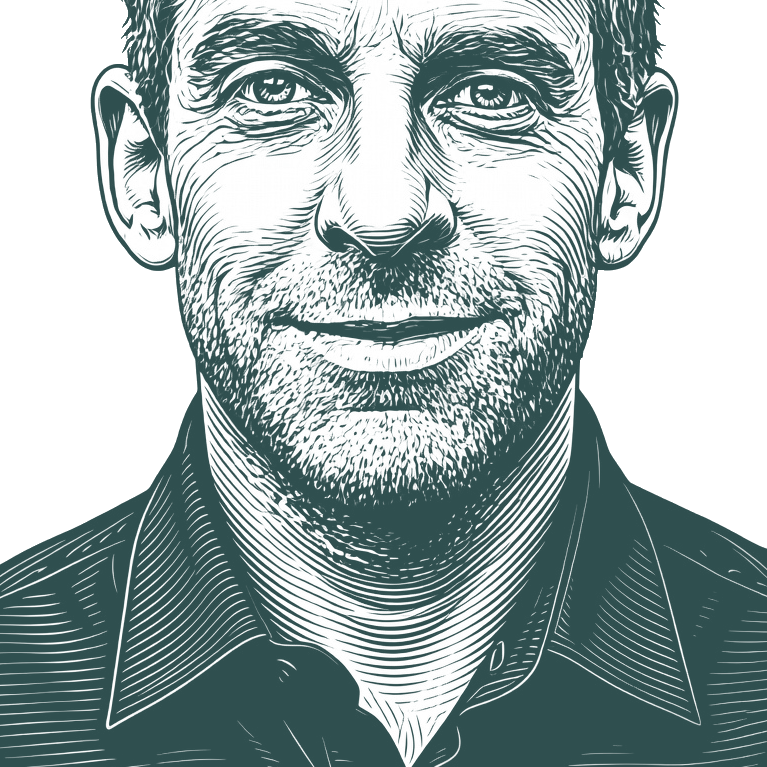
Samuel Benjamin Harris (born April 9, 1967) is an American author, philosopher, public intellectual, and neuroscientist, as well as the co-founder and CEO of Project Reason. He is the author of The End of Faith (2004), which won the PEN/Martha Albrand Award for First Nonfiction in 2005 and appeared on The New York Times best seller list for 33 weeks, Letter to a Christian Nation (2006), The Moral Landscape (2010), Lying (2011), Free Will (2012), and most recently Waking Up: A Guide to Spirituality Without Religion (2014).
Bio from: Wikiquote (CC BY-SA 4.0) · Portrait adapted from: Wikimedia Commons, Cmichel67 (Christopher Michel) (CC BY-SA)
Birth Name:
Samuel Benjamin Harris
Alternative Names:
Samuel Harris
From Wikidata (CC0)

Showing quotes in randomized order to avoid selection bias. Click Popular for most popular quotes.
"So it is not that these texts have maintained their integrity over time (they haven't); it is just that they have been effectively edited by our neglect of certain of their passages. Most of what remains — the "good parts" — has been spared the same winnowing because we do not yet have a truly modern understanding of our ethical institutions and our capacity for spiritual experience. If we better understood the workings of the human brain, we would undoubtedly discover lawful connections between our states of consciousness, our modes of conduct, and the various ways we use our attention. What makes one person happier than another? Why is love more conducive to happiness than hate? Why do we generally prefer beauty to ugliness and order to chaos? Why does it feel so good to smile and laugh, and why do these shared experiences generally bring people closer together? Is the ego an illusion, and, if so, what implications does this have for human life? Is there life after death? These are ultimately questions for a mature science of the mind. If we ever develop such a science, most of our religious texts will be no more useful to mystics than they now are to astronomers."
Science has long been in the value business. Despite a widespread belief to the contrary, scientific validity is not the result of scientists abstaining from making value judgments; rather, scientific validity is the result of scientists making their best efforts to value principles of reasoning that link their beliefs to reality, through reliable chains of evidence and argument. This is how norms of rational thought are made effective... The answer to the question "What should I believe, and why should I believe it?" is generally a scientific one.
The search for comfort at the expense of truth has never been a motive for religious belief, since all creeds are chock-full of terrible proposals, which are no more comfort to anyone and which the faithful believe despite the pain it causes them, for fear of leaving some dark corner of reality unacknowledged.
Unlimited Quote Collections
Organize your favorite quotes without limits. Create themed collections for every occasion with Premium.
Tegmark: That’s right, and there’s a more elemental example. In a certain sense, your genes have invented you. They built your brain so that you could make copies of your genes. That’s why you like to eat — so you won’t starve to death. And that’s why we fall in love — to make copies of our genes, right? But even though we know this, we still choose to use birth control, which is the opposite of what our genes want.
Some people dismiss the idea that there will ever be anything smarter than humans for mystical reasons — because they think there’s something more than quarks and electrons and information processing going on in us. But if you take the scientific approach, that you really are your quarks, then there’s clearly no physical law of physics that precludes anything more intelligent than a human. We were constrained by how many quarks you could fit into a skull, and things like that — constraints that computers don’t have. It becomes instead more a question of time. And, as you said, there’s a relentless pressure to make smarter things, because it’s profitable and interesting and useful. The question isn’t if this will happen, but when. And finally, to come back to those ants. Suppose you’re in charge of a huge green-energy project, and just as you’re about to let the water flood the hydroelectric dam you’ve built, someone points out that there’s an anthill right in the middle of the flood zone. Now, you know the ants don’t want to be drowned, right? So you have to make a decision. What are you going to do?
Harris: Well, in that case, too bad for the ants.
Tegmark: Exactly. So we ought to plan ahead. We don’t want to end up like the ants.
Wherever there are right and wrong answers to important questions, there will be better or worse ways to get those answers, and better or worse ways to put them to use. Take child rearing as an example: How can we keep children free from disease? How can we raise them to be happy and responsible members of society? There are undoubtedly both good and bad answers to questions of this sort, and not all belief systems and cultural practices will be equally suited to bringing the good ones to light. This is not to say that there will always be only one right answer to every question, or a single, best way to reach every specific goal. But given the inescapable specificity of our world, the range of optimal solutions to any problem will generally be quite limited. While there might not be one best food to eat, we cannot eat stones — and any culture that would make stone eating a virtue, or a religious precept, will suffer mightily for want of nourishment (and teeth). It is inevitable, therefore, that some approaches to politics, economics, science, and even spirituality and ethics will be objectively better than their competitors (by any measure of “better” we might wish to adopt), and gradations here will translate into very real differences in human happiness.
Harris Very interesting. So when we talk about a phenomenon like honor killing, we’re not just worried about Islamists; we’re worried about how the average conservative Muslim man will treat his wife or daughter in light of his religious beliefs and cultural values. And yet many of these conservatives may be opponents of Islamism. Nawaz Yes. Conservative Muslims can be very useful as allies against Islamism and jihadism, but they may oppose you on gender rights and equality and, in some cases, honor killings.
I have no doubt that your acceptance of Christ coincided with some very positive changes in your life. Perhaps you now love other people in a way that you never imagined possible. You may even experience feelings of bliss while praying. I do not wish to denigrate any of these experiences. I would point out, however, that billions of other human beings, in every time and place, have had similar experiences — but they had them while thinking about Krishna, or Allah, or the Buddha, while making art or music, or while contemplating the beauty of nature.
The core of science is not controlled experiment or mathetical modeling; it is intellectual honesty. It is time we acknowledge a basic feature of human discourse: when considering the truth of a proposition, one is either engaged in an honest appraisal of the evidence and logical arguments, or one isn't.