It should be explained that the cure of Verrieres, an old man of eighty, but blessed by the keen air of his mountains with an iron character and strength, had the right to visit at any hour of the day the prison, the hospital, and even the poorhouse. It was at six o'clock in the morning precisely that M. Appert, who was armed with an introduction to the cure from Paris, had had the good sense to arrive in an inquisitive little town. He had gone at once to the presbytery.
French writer (1783–1842)
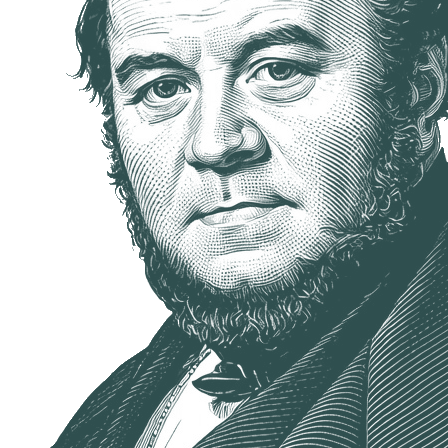
Marie-Henri Beyle (January 23, 1783 – March 23, 1842), more widely known as Stendhal, the most famous of his many pen-names, was a 19th century French writer.
Bio from: Wikiquote (CC BY-SA 4.0) · Portrait adapted from: Wikimedia Commons, Olof Johan Södermark (Public domain / CC0)
Pen Names:
Henri Stendhal
•
Stendalis
•
Louis Alexandre Bombet
•
Anastase de Serpière
•
Don Flegme
•
William Crocodile
•
Dominique
Alternative Names:
Henri Beyle
•
Marie Henri Beyle
•
Marie-Henri Beyle
From Wikidata (CC0)

Showing quotes in randomized order to avoid selection bias. Click Popular for most popular quotes.
Je ne vois que las condamnation a mort qui distingue un homme, pensa Mathilde, c'est la seule chose qui ne s'achete pas.
Ah! c'est un bon mot que je viens de me dire! quel dommage qu'il ne soit pas venu de facon a m'en faire honneur. Mathilde avait trop de gout pour amener dans la conversation un bon mot fait d'avance, mais elle avait aussie trop de vanite pour ne pas etre enchantee d'elle-meme.
Why not make an end of it all? he asked himself. Why this obstinate resistance to the fate that is crushing me? It is all very well my forming what are apparently the most reasonable forms of conduct, my life is a succession of griefs and bitter feelings. This month is no better than the last; this year is no better than last year. Why this obstinate determination to go on living? Can I be wanting in firmness? What is death? he asked himself, opening his case of pistols and examining them. A very small matter, when all is said; only a fool would be concerned about it.
"Presque tous les malheurs de la vie viennent des fausses idées que nous avons sur ce qui nous arrive. Connaître à fond les hommes, juger sainement des événements, est donc un grand pas vers le bonheur."
("Almost all our misfortunes in life come from the wrong notions we have about the things that happen to us. To know men thoroughly, to judge events sanely, is, therefore, a great step towards happiness.")
[Journal entry, 10 December 1801]
...he could no longer give a thought to anything else. His days passed like hours. At all hours of the day, when he sought to occupy his mind with some serious business, his thoughts would abandon everything, and he would come to himself a quarter of an hour later, his heart throbbing, his head confused, and dreaming of this one idea: 'Does she love me?
"But all these details are but abominable egotism!"
"No doubt, and what is this book, but an abominable egotism!" [...] If this book be boring, in two years it shall wrap butter at the grocer's; if it bore not, one shall see that egotism, but a sincere one, is a way of painting the human heart on the knowledge of which we have made a giant's steps since 1721, time of the Persian Letters of this man I've studied so much—Montesquieu.
This beautiful thought, of 'dying close by that which one loves', expressed in a hundred different ways, was followed by a sonnet in which it was found that the soul, separated, after atrocious torments, from the frail body in which it dwelt for twenty-three years, and impelled by that instinct for happiness natural to all that has once existed, would not reascend to heaven to mingle with angelic choirs as soon as it was set free, and in the event of the awful judgment according it forgiveness for its sins, but, happier after death than it had been in life, it would go a few steps from the prison where it had lamented for so long, to be reunited with all that it had loved in the world. And thus, the sonnet's last line went. I shall have found my paradise on earth.