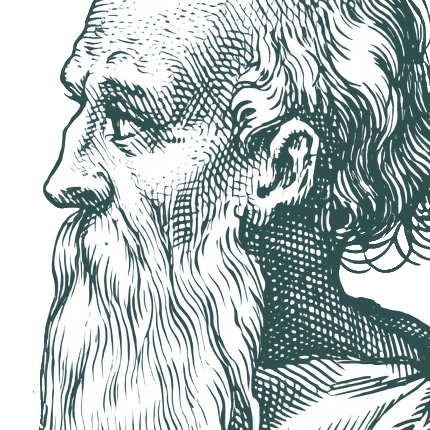
What disturbs men's minds is not events but their judgements on events: For instance, death is nothing dreadful, or else Socrates would have thought … - Epictetus
""
What disturbs men's minds is not events but their judgements on events: For instance, death is nothing dreadful, or else Socrates would have thought it so. No, the only dreadful thing about it is men's judgement that it is dreadful. And so when we are hindered, or disturbed, or distressed, let us never lay the blame on others, but on ourselves, that is, on our own judgements. To accuse others for one's own misfortunes is a sign of want of education; to accuse oneself shows that one's education has begun; to accuse neither oneself nor others shows that one's education is complete.
Epictetus (c. 55 – c. 135 AD), born a slave, was a Greek Stoic philosopher. His words were recorded by his student Arrian in the Discourses and Enchiridion written in the early 2nd-century.
Biography information from
Wikiquote·
Portrait adapted from
Wikimedia Commons, Theodoor Galle (Public domain / CC0)
Also Known As
Native Name:
ΕΠΙΚΤΗΤΟΣ
Alternative Names:
Epictetus of Hierapolis
•
Epiktetos
Related quotes. More quotes will automatically load as you scroll down, or you can use the load more buttons.
Shorter versions of this quote
What upsets people is not things themselves but their judgements about these things.
What disturbs men's minds is not events but their judgements on events:
What upsets people is not things themselves but their judgments about the things. For example, death is nothing dreadful (or else it would have appeared dreadful to Socrates), but instead the judgment about death that it is dreadful — that is what is dreadful. So when we are thwarted or upset or distressed, let us never blame someone else but rather ourselves, that is, our own judgments. An uneducated person accuses others when he is doing badly; a partly educated person accuses himself, an educated person accuses neither someone else nor himself.
Every challenge is presented to you so that you will choose love and turn away from negativity and blame.
Remember that you are an actor in a drama of such sort as the author chooses, - if short, then in a short one; if long, then in a long one. If it be his pleasure that you should enact a poor man, see that you act it well; or a cripple, or a ruler, or a private citizen. For this is your business, to act well the given part; but to choose it, belongs to another.
Works in ChatGPT, Claude, or Any AI
Add semantic quote search to your AI assistant via MCP. One command setup.
The philosopher's school, ye men, is a surgery: you ought not to go out of it with pleasure, but with pain. For you are not in sound health when you enter.