British American author and lecturer (1915–1973)
Alan Wilson Watts (6 January 1915 – 16 November 1973) was an English philosopher, writer, speaker, and expert in comparative religion.
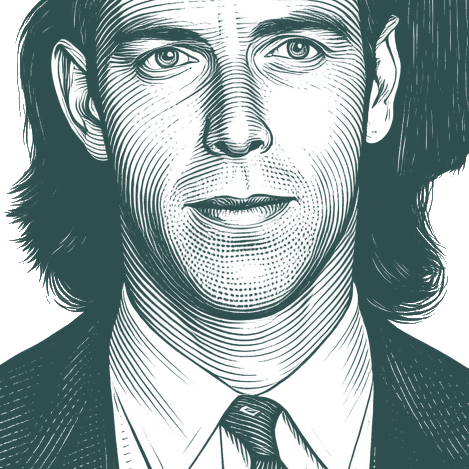
Bio from: Wikiquote (CC BY-SA 4.0) · Portrait adapted from: Wikimedia Commons, The University of Vermont Alumni Magazine vol. 39 no. 01, p. 22. (Public domain / CC0)
From Wikidata (CC0)

Taoism, Confucianism, and Zen are expressions of a mentality which feels completely at home in this universe, and which sees man as an integral part of his environment. Human intelligence is not an imprisoned spirit from afar but an aspect of the whole intricately balanced organism of the natural world [...].
It is as if the eyes were trying to look at themselves directly, or as if one were trying to describe the color of a mirror in terms of colors reflected in the mirror. Just as sight is something more than all things seen, the foundation or “ground” of our existence and our awareness cannot be understood in terms of things that are known. We are forced, therefore, to speak of it through myth - that is, through special metaphors, analogies, and images which say what it is like as distinct from what it is. At one extreme of its meaning, “myth” is fable, falsehood, or superstition. But at another, “myth” is a useful and fruitful image by which we make sense of life in somewhat the same way that we can explain electrical forces by comparing them with the behavior of water or air. Yet “myth,” in this second sense, is not to be taken literally, just as electricity is not to be confused with air or water. Thus in using myth one must take care not to confuse image with fact, which would be like climbing up the signpost instead of following the road.
It is this participation in the essential glorious nonsense that is at the heart of the world, not necessarily going anywhere. It seems that only in moments of unusual insight and illumination that we get the point of this, and find that the true meaning of life is no meaning, that its purpose is no purpose, and that its sense is non-sense.
Instead of thinking that you’re a victim of a mechanical world or an autocratic God, try this on — the life you’re living is what you have put yourself into. Only you won’t admit it because you want to play the game that it has happened to you. But instead of blaming your father for getting horny for your mother, and expecting both of them to take responsibility for your crummy life since they brought you into the world, try considering that you were the shiny gleam in your father’s eye when he approached your mother, and that it was your intention that led you to become deliberately involved in this particular existence. And even if you’ve had a terrible life — rife with syphilis and tuberculosis and the Siberian Itch — it has all, nevertheless, been a game. And isn’t that an optimal hypothesis?
Finally, there are two specific objections to use of psychedelic drugs. First, use of these
drugs may be dangerous. However, every worth-while exploration is dangerous — climbing
mountains, testing aircraft, rocketing into outer space, skin diving, or collecting botanical
specimens in jungles. But if you value knowledge and the actual delight of exploration more
than mere duration of uneventful life, you are willing to take the risks. It is not really healthy
for monks to practice fasting, and it was hardly hygienic for Jesus to get himself crucified,
but these are risks taken in the course of spiritual adventures.
If, if we get our heads straight about money, I predict that by ad 2000, or sooner, no one will pay taxes, no one will carry cash, utilities will be free, and everyone will carry a general credit card. This card will be valid up to each individual’s share in a guaranteed basic income or national dividend, issued free, beyond which he may still earn anything more that he desires by an art or craft, profession or trade that has not been displaced by automation. (For detailed information on the mechanics of such an economy, the reader should refer to Robert Theobald’s Challenge of Abundance and Free Men and Free Markets, and also to a series of essays that he has edited, The Guaranteed Income. Theobald is an avant–garde economist on the faculty of Columbia University.)
The perfect Way [Tao] is without difficulty, Save that it avoids picking and choosing. Only when you stop liking and disliking Will all be clearly understood. A split hair’s difference, And heaven and earth are set apart! If you want to get the plain truth, Be not concerned with right and wrong. The conflict between right and wrong Is the sickness of the mind.1 a
To be aware, then, is to be aware of thoughts, feelings, sensations, desires, and all other forms of experience. Never at any time are you aware of anything which is not experience, not a thought or feeling, but instead an experiencer, thinker, or feeler. If this is so, what makes us think that any such thing exists?
All this seems marvelously futile, and yet, when you begin to think about it, it begins to be more marvelous than futile. Indeed, it seems extremely odd.
It is a special kind of enlightenment to have this feeling that the usual, the way things normally are, is odd - uncanny and highly improbable. G. K. Chesterton once said that it is one thing to be amazed at a gorgon or a griffin, creatures which do not exist; but it is quite another and much higher thing to be amazed at a rhinoceros or a giraffe, creatures which do exist and look as if they don’t. This feeling of universal oddity includes a basic and intense wondering about the sense of things. Why, of all possible worlds, this colossal and apparently unnecessary multitude of galaxies in a mysteriously curved space-time continuum, these myriads of differing [...] species playing frantic games of one-upmanship, these numberless ways of “doing it” from the elegant architecture of the snow crystal or the diatom to the startling magnificence of the lyrebird or the peacock?