We crave distraction — a panorama of sights, sounds, thrills, and titillations into which as much as possible must be crowded in the shortest possible time. To keep up this “standard” most of us are willing to put up with lives that consist largely in doing jobs that are a bore, earning the means to seek relief from the tedium by intervals of hectic and expensive pleasure. These intervals are supposed to be the real living, the real purpose served by the necessary evil of work.
British American author and lecturer (1915–1973)
Alan Wilson Watts (6 January 1915 – 16 November 1973) was an English philosopher, writer, speaker, and expert in comparative religion.
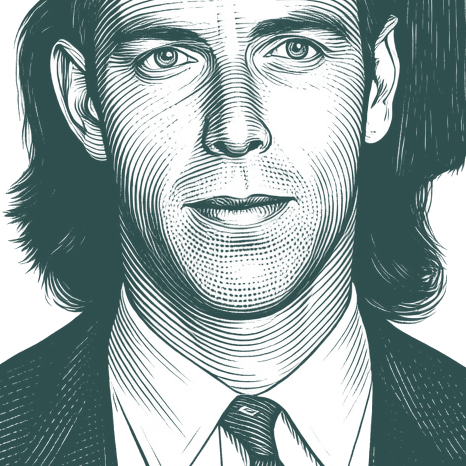
Bio from: Wikiquote (CC BY-SA 4.0) · Portrait adapted from: Wikimedia Commons, The University of Vermont Alumni Magazine vol. 39 no. 01, p. 22. (Public domain / CC0)
Alternative Names:
Alan Wilson Watts
•
Alan W. Watts
From Wikidata (CC0)

"This is why modern civilization is in almost every respect a vicious circle. It is insatiably hungry because its way of life condemns it to perpetual frustration. [...] [T]he root of this frustration is that we live for the future, and the future is an abstraction, a rational inference from experience, which exists only for the brain. The "primary consciousness," the basic mind which knows reality rather than ideas about it, does not know the future. It lives completely in the present, and perceives nothing more that what is at this moment. The ingenious brain, however, looks at that part of present experience called memory, and by studying it is able to make predictions. These predictions are, relatively, so accurate and reliable (e.g., "everyone will die") that the future assumes a high degree of reality - so high that the present loses its value."
I am reminded of the apocryphal conversation between Confucius and Lao-tzu, when the former had been prating of universal love without the element of self. “What stuff!” cried Lao-tzu. “Does not universal love contradict itself? Is not your elimination of self a positive manifestation of self? Sir, if you would cause the world not to lose its source of nourishment: there is the universe, its regularity is unceasing; there are the sun and moon, their brightness is unceasing; there are the stars, their groupings never change; there are the birds and beasts, they flock together without varying; there are trees and shrubs, they grow upward without exception. Like these, accord with the Tao — with the way of
Strictly speaking, these drugs do not impart wisdom at all, any more than the microscope alone gives knowledge. They provide the raw materials of wisdom, and are useful to the extent that the individual can integrate what they reveal into the whole pattern of his behavior and the whole system of his knowledge.
In the light of these principles, how does the mind absorb suffering? It discovers that resistance and escape — the “I” process — is a false move. The pain is inescapable, and resistance as a defense only makes it worse; the whole system is jarred by the shock. Seeing the impossibility of this course, it must act according to its nature — remain stable and absorb.
[I]t is not quite true that one must wait for something to happen spontaneously. For the heart is beating, the breath is moving, and all the senses are perceiving. A whole world of experience is coming to the organism of itself, without the slightest forcing. This spontaneous arrival of experience is not actually passive; it is already spontaneous action.
[T]he world is a system of inseparable relationships and not a mere juxtaposition of things. The verbal, piecemeal and analytic mode of perception has blinded us to the fact that things and events do not exist apart from each other. The world is a whole greater than the sum of its parts because the parts are not merely summed - thrown together - but related. The whole is a pattern which remains, while the parts come and go, just as the human body is a dynamic pattern which persists despite the rapid birth and death of all its individual cells. The pattern does not, of course, exist disembodiedly apart from individual forms, but exists precisely through their coming and going - just as it is through the structured motion and vibration of its electrons that a rock has solidity.