British American author and lecturer (1915–1973)
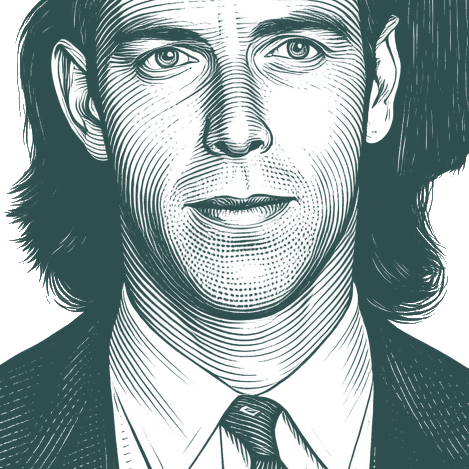
Alan Wilson Watts (6 January 1915 – 16 November 1973) was an English philosopher, writer, speaker, and expert in comparative religion.
Bio from: Wikiquote (CC BY-SA 4.0) · Portrait adapted from: Wikimedia Commons, The University of Vermont Alumni Magazine vol. 39 no. 01, p. 22. (Public domain / CC0)
From Wikidata (CC0)

Belief, as I use the word here, is the insistence that the truth is what one would “lief” or wish it to be. The believer will open his mind to the truth on condition that it fits in with his preconceived ideas and wishes. Faith, on the other hand, is an unreserved opening of the mind to the truth, whatever it may turn out to be. Faith has no preconceptions; it is a plunge into the unknown. Belief clings, but faith lets go. In this sense of the word, faith is the essential virtue of science, and likewise of any religion that is not self-deception.
there is a growing apprehension that existence is a rat-race in a trap: living organisms, including people, are merely tubes which put things in at one end and let them out at the other, which both keeps them doing it and in the long run wears them out. So to keep the farce going, the tubes find ways of making new tubes, which also put things in at one end and let them out at the other.
When the critical intellect looks at anything carefully, it vanishes. [...] The reason is, of course, that ''things'' exist only relatively - for a point of view or for convenience of description. Thus when we inspect any unit more closely we find that its structure is more complex and more differentiated than we had supposed. Its variety comes to impress us more than its unity. This is why there is something of the spirit of debunking in all scholarship and scientific inquiry.
Works in ChatGPT, Claude, or Any AI
Add semantic quote search to your AI assistant via MCP. One command setup.
"If, on the other hand, you are aware of fear, you realize that, because this feeling is now yourself, escape is impossible. You see that calling it "fear" tells you little or nothing about it, for the comparison and the naming is based, not on past experience, but on memory. You have then no choice but to be aware of it with your whole being as an entirely new experience. Indeed, every experience is in this sense new, and at every moment of our lives we are in the midst of the new and the unknown. At this point you receive the experience without resisting it or naming it, and the whole sense of conflict between "I" and the present reality vanishes."
The trend of all this is towards the end of individual privacy, to an extent where it may even be impossible to conceal one’s thoughts. At the end of the line, no one is left with a mind of his own: there is just a vast and complex community-mind, endowed, perhaps, with such fantastic powers of control and prediction that it will already know its own future for years and years to come.
"Under any civilized conditions it is, of course, impossible for anyone to act without laying plans, or to refuse absolutely to participate in an economy of waste and violence, [...]. It is, however, possible to see that this competitive "rat race" need not be taken seriously, or rather, that if we are to persist in it at all it must not be taken seriously unless "nervous breakdowns are to become as common as colds
up.” The Native Americans laugh at the “palefaces” because they say, “The paleface does not know when he is hungry until he looks at his watch.” So in this way we become clock-dominated, and the abstract system takes over from the physical, organic situation. As a result, we have run into a cultural situation where we have confused the symbol with the physical reality, the money with the wealth, the menu with the dinner, and as a result we are starving from eating menus.