Greek Stoic philosopher (c. 50–c. 138)
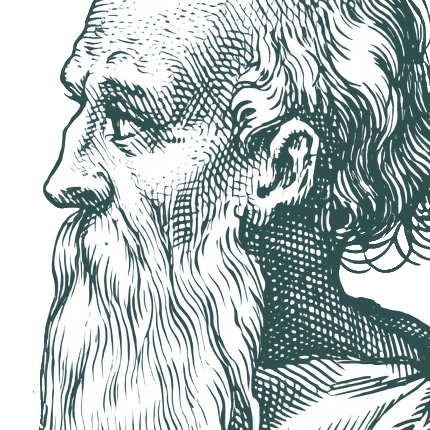
Epictetus (c. 55 – c. 135 AD), born a slave, was a Greek Stoic philosopher. His words were recorded by his student Arrian in the Discourses and Enchiridion written in the early 2nd-century.
Bio from: Wikiquote (CC BY-SA 4.0) · Portrait adapted from: Wikimedia Commons, Theodoor Galle (Public domain / CC0)
From Wikidata (CC0)
It is one thing to put bread and wine away in a store-room, and quite another to eat them. What is eaten is digested and distributed around the body, to become sinews, flesh, bones, blood, a good complexion, sound breathing. What is stored away is ready at hand, to be sure, to be taken out and displayed whenever you wish, but you derive no benefit from it, except that of having the reputation of possessing it.
It is not wisdom that contrives arms, or walls, or instruments useful in war; nay, her voice is for peace, and she summons all mankind to concord. It is not she, I maintain, who is the artisan of our indispensable implements of daily use. Why do you assign to her such petty things? You see in her the skilled artisan of life. The other arts, it is true, wisdom has under her control; for he whom life serves is also served by the things which equip life. But wisdom's course is toward the state of happiness; thither she guides us, thither she opens the way for us. She shows us what things are evil and what things are seemingly evil; she strips our minds of vain illusion. She bestows upon us a greatness which is substantial, but she represses the greatness which is inflated, and showy but filled with emptiness; and she does not permit us to be ignorant of the difference between what is great and what is but swollen; nay, she delivers to us the knowledge of the whole of nature and of her own nature. She discloses to us what the gods are and of what sort they are; what are the nether gods, the household deities, and the protecting spirits; what are the souls which have been endowed with lasting life and have been admitted to the second class of divinities, where is their abode and what their activities, powers, and will.
Your son is dead. What has happened? Your son is dead. Nothing more? Nothing. Your ship is lost. What has happened? Your ship is lost. A man has been led to prison. What has happened? He has been led to prison. But that herein he has fared badly, every man adds from his own opinion.From Epictetus's discourse on how we should train ourselves against appearances (Discourses III.8), recorded by his student Arrian.
When you see a person weeping in sorrow either when a child goes abroad or when he is dead, or when the man has lost his property, take care that the appearance do not hurry you away with it, as if he were suffering in external things. But straightway make a distinction in your own mind, and be in readiness to say, it is not that which has happened that afflicts this man, for it does not afflict another, but it is the opinion about this thing which afflicts the man.Enchiridion 16, the handbook of Epictetus's teaching compiled by his student Arrian.
Try QuoteGPT
Chat naturally about what you need. Each answer links back to real quotes with citations.
Οὐκ ἐπαγγέλλεται φιλοσοφία τῶν ἐκτός τι περιποιήσειν τῷ ἀνθρώπῳ· εἰ δὲ μή, ἔξω τι τῆς ἰδίας ὕλης ἀναδέξεται. ὡς γὰρ τέκτονος ὕλη τὰ ξύλα, ἀνδριαντοποιοῦ ὁ χαλκός, οὕτως τῆς περὶ βίον τέχνης ὕλη ὁ βίος αὐτοῦ ἑκάστου.From Epictetus's discourse on what philosophy promises (Discourses I.15), recorded by his student Arrian; answering a man who asked how to make his brother stop being angry with him.