Greek Stoic philosopher (c. 50–c. 138)
Epictetus (c. 55 – c. 135 AD), born a slave, was a Greek Stoic philosopher. His words were recorded by his student Arrian in the Discourses and Enchiridion written in the early 2nd-century.
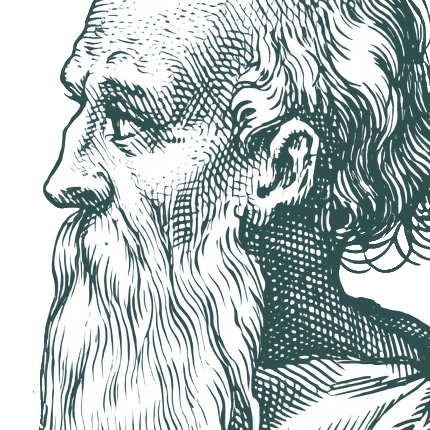
Bio from: Wikiquote (CC BY-SA 4.0) · Portrait adapted from: Wikimedia Commons, Theodoor Galle (Public domain / CC0)
From Wikidata (CC0)
Men are disturbed not by things, but by the views which they take of things. Thus death is nothing terrible, else it would have appeared so to Socrates. But the terror consists in our notion of death, that it is terrible. When, therefore, we are hindered, or disturbed, or grieved let us never impute it to others, but to ourselves; that is, to our own views. It is the action of an uninstructed person to reproach others for his own misfortunes; of one entering upon instruction, to reproach himself; and of one perfectly instructed, to reproach neither others or himself.
What upsets people is not things themselves but their judgments about the things. For example, death is nothing dreadful (or else it would have appeared dreadful to Socrates), but instead the judgment about death that it is dreadful — that is what is dreadful. So when we are thwarted or upset or distressed, let us never blame someone else but rather ourselves, that is, our own judgments. An uneducated person accuses others when he is doing badly; a partly educated person accuses himself, an educated person accuses neither someone else nor himself.
But prove to me that one who holds inferior judgments can prevail over a man who is superior in his judgments. You never will prove it, nor anything like it; for the law of nature and of god is this: Let the better always be superior to the worse… Thus I, too, lost my lamp to a thief because the thief was better at keeping awake than I. But he bought a lamp at the price of being a thief, a rogue, and a brute. That seemed to him a good bargain.
Epictetus
"If you do not wish to be prone to anger, do not feed the habit; give it nothin which may tend to its increase. At first, keep quiet and count the days when you were not angry: "I used to be angry every day, then every other day: next, every two, then every three days!" and if you succeed in passing thirty days, sacrifice to the gods in thanksgiving."
Ἐφ' ἑκάστου τῶν ψυχαγωγούντων ἢ χρείαν παρεχόντων ἢ στεργομένων μέμνησο ἐπιλέγειν, ὁποῖόν ἐστιν, ἀπὸ τῶν σμικροτάτων ἀρξάμενος· ἂν χύτραν στέργῃς, ὅτι «χύτραν στέργω». κατεαγείσης γὰρ αὐτῆς οὐ ταραχθήσῃ· ἂν παιδίον σαυτοῦ καταφιλῇς ἢ γυναῖκα, ὅτι ἄνθρωπον καταφιλεῖς· ἀποθανόντος γὰρ οὐ ταραχθήσῃ.Enchiridion 3, the handbook of Epictetus's teaching compiled by his student Arrian.
Enhance Your Quote Experience
Enjoy ad-free browsing, unlimited collections, and advanced search features with Premium.