In the history of science it happens not infrequently that a reductionist approach leads to a spectacular success. Frequently the understanding of a complicated system as a whole is impossible without an understanding of its component parts. And sometimes the understanding of a whole field of science is suddenly advanced by the discover of a single basic equation. Thus it happened that the Schrodinger equation in 1926 and the Dirac equation in 1927 brought a miraculous order into the previously mysterious processes of atomic physics. The equations of Erwin Schrodinger and Paul Dirac were triumphs of reductionism. Bewildering complexities of chemistry and physics were reduced to two lines of algebraic symbols. These triumphs were in Oppenheimer's mind when he belittled his own discovery of black holes. Compared with the abstract beauty and simplicity of the Dirac equation, the black hole solution seemed to him ugly, complicated, and lacking in fundamental significance.
theoretical physicist and mathematician (1923–2020)
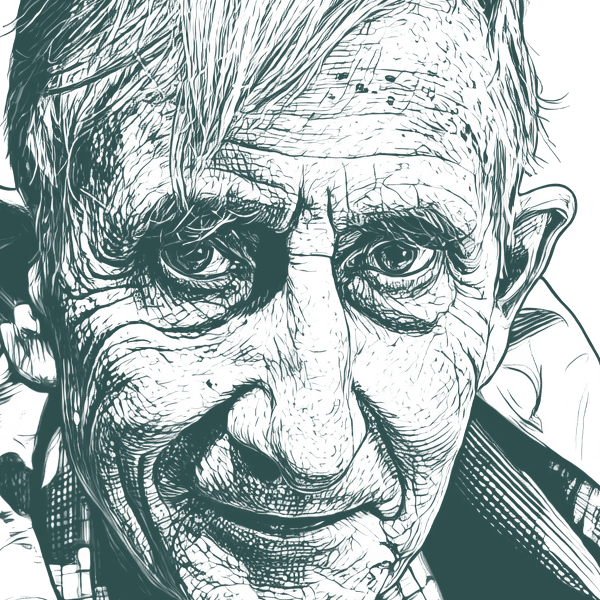
Freeman John Dyson (15 December 1923 – 28 February 2020) was an English-born American physicist, mathematician, and futurist, famous for his work in quantum mechanics, nuclear weapons design and policy, and the search for extraterrestrial intelligence. He was the winner of the Templeton Prize in the year 2000.
Bio from: Wikiquote (CC BY-SA 4.0) · Portrait adapted from: Wikimedia Commons, ioerror (CC BY-SA)
Birth Name:
Freeman John Dyson
Alternative Names:
Freeman J. Dyson
From Wikidata (CC0)
Showing quotes in randomized order to avoid selection bias. Click Popular for most popular quotes.
It is probably not an accident that modern science grew explosively in Christian Europe and left the rest of the world behind. A thousand years of theological disputes nurtured the habit of analytical thinking that could also be applied to the analysis of natural phenomena. On the other hand, the close historical relations between theology and science have caused conflicts between science and Christianity that does not exist between science and other religions.
I am content to be one of the multitude of Christians who do not care much about the doctrine of the Trinity or the historical truth of the gospels. Both as a scientist and as a religious person, I am accustomed to living with uncertainty. Science is exciting because it is full of unsolved mysteries, and religion is exciting for the same reason. The greatest unsolved mysteries are the mysteries of our existence as conscious beings in a small corner of a vast universe.
Works in ChatGPT, Claude, or Any AI
Add semantic quote search to your AI assistant via MCP. One command setup.
Anyone who compares the bibliography with the reprinted papers will notice that mathematics and physics have not been given equal treatment. There is a strong bias in favor of mathematics. The bias arises from the fact that mathematical papers, provided that are correct and not trivial, have permanent value, whereas most papers in physics journals are ephemeral. For this reason, it is customary to publish complete collected works of mathematicians but only selected works of physicists.
"It is remarkable that mind enters into our awareness of nature on two separate levels. At the highest level, the level of human consciousness, our minds are somehow directly aware of the complicated flow of electrical and chemical patterns in our brains. At the lowest level, the level of single atoms and electrons, the mind of an observer is again involved in the description of events. Between lies the level of molecular biology, where mechanical models are adequate and mind appears to be irrelevant. But I, as a physicist, cannot help suspecting that there is a logical connection between the two ways in which mind appears in my universe. I cannot help thinking that our awareness of our own brains has something to do with the process which we call "observation" in atomic physics. That is to say, I think our consciousness is not just a passive epiphenomenon carried along by the chemical events in our brains, but is an active agent forcing the molecular complexes to make choices between one quantum state and another. In other words, mind is already inherent in every electron, and the processes of human consciousness differ only in degree but not in kind from the processes of choice between quantum states which we call "chance" when they are made by electrons."
It is more difficult for a modern scientist to be a serious Christian, like Polkinghorne, than to be a serious Muslim, like the Nobel Prize-winning physicisit Abdus Salam. Salam happily proclaimed his Muslim faith but did not feel any need to write books about it. For Salam, the idea of a conflict between his faith and his science was ludicrous. Muslim faith has nothing to do with science. But Polkinghorne writes books to prove to himself and to us that his theology and his science can live together harmoniously..
In the time of Jesus and for many centuries afterwards, there was a free market in human bodies. The institution of slavery was based on the legal right of slave-owners to buy and sell their property in a free market. Only in the nineteenth century did the abolitionist movement, with Quakers and other religious believers in the lead, succeed in establishing the principle that the free market does not extend to human bodies. The human body is God's temple and not a commercial commodity. And now in the twenty-first century, for the sake of equity and human brotherhood, we must maintain the principle that the free market does not extend to human genes. Let us hope that we can reach a consensus on this question without fighting another civil war.